Part S Building Regulations
Part S came into force in June 2022. It applies to new residential buildings and major renovations. Here is what the regulations actually mean for apartment buildings.
For new builds, the number of charge points required depends on the ratio of parking spaces to dwellings. Where there are fewer spaces than dwellings, every space needs a charge point. Where there are equal or more spaces than dwellings, the number of charge points matches the number of dwellings. Any remaining spaces in buildings with more than 10 total spaces must have cable routes for future connectivity. A cost cap of £3,600 per charge point applies. Where costs exceed this, cable routes can be installed instead.
For major renovations with more than 10 parking spaces after completion, at least one charge point per dwelling is required with cable routes to remaining spaces. If installation costs exceed 7% of the total renovation capital cost, only cable routes are required.
Existing apartment blocks adding EV charging as a retrofit are usually outside Part S scope. This changes if the works qualify as major renovation or involve a material change of use. Many property managers follow Part S guidance anyway. It provides a sensible baseline for future proofing infrastructure. We can advise which requirements apply to your building.
Electrical Safety Standards
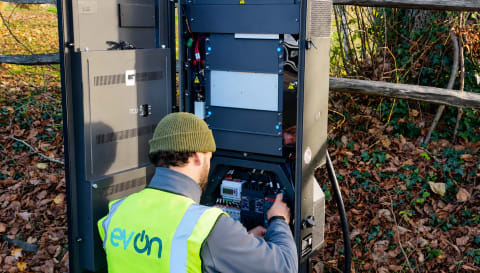
All EV charger installations must comply with BS 7671, specifically Section 722 for EV charging circuits. This is standard practice for any qualified installer.
Each charger requires a dedicated circuit with Type B RCD protection for DC fault detection. Cable sizing must accommodate sustained loads without diversity reduction, typically 32A for a 7kW charger. In apartment blocks, installers typically use a TT earthing arrangement with a separate earth electrode rather than relying on the building PME supply. This is a safety requirement we handle as part of every installation.
Load management prevents the building electrical supply from being overloaded. Smart charging technology monitors total demand and adjusts charging rates automatically across all chargers.
Smart Charging Requirements
Since 30 June 2022, all new EV chargepoints sold for domestic and workplace use in Great Britain must be smart chargers under the Electric Vehicles (Smart Charge Points) Regulations 2021. This does not apply to existing installed chargers or public rapid chargepoints above 50kW.
Smart chargers can be remotely controlled and respond to grid signals. They are pre configured to avoid weekday peak periods, typically 8:00 to 11:00 and 16:00 to 22:00. Users can override these default settings. Smart functionality enables load balancing across multiple charge points. This is essential for apartment buildings where electrical capacity is shared between residents.
Fire Safety Standards
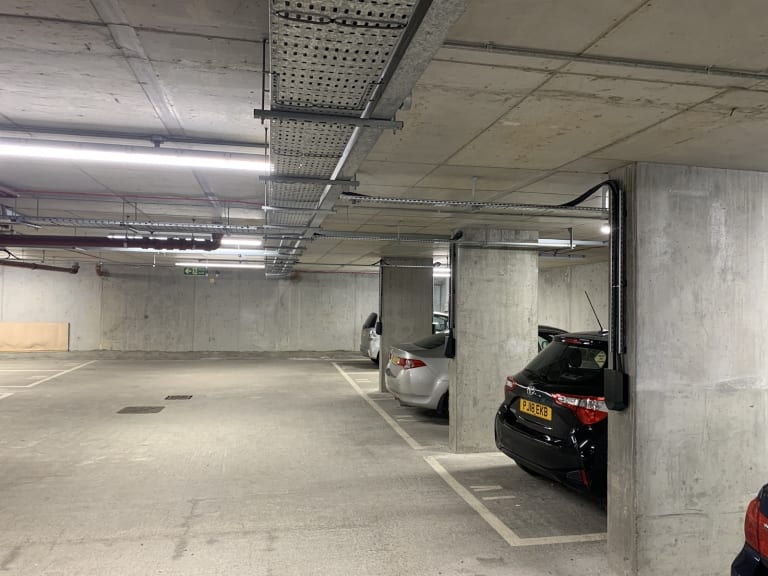
Fire safety guidance can feel overwhelming, but in practice the requirements are clear. Covered car parks are exempt from active chargepoint installation requirements under Part S due to fire safety considerations. Cable routes must still be provided. If chargepoints are voluntarily installed in covered or basement car parks, a fire risk assessment must be completed in accordance with OZEV interim fire safety guidance from 2023.
The assessment covers suppression systems, structural fire resistance, vehicle spacing, ventilation, and thermal monitoring. Open air surface car parks have simpler requirements. All installations should be documented for the building fire risk assessment. We provide this documentation as standard.
Planning Permission
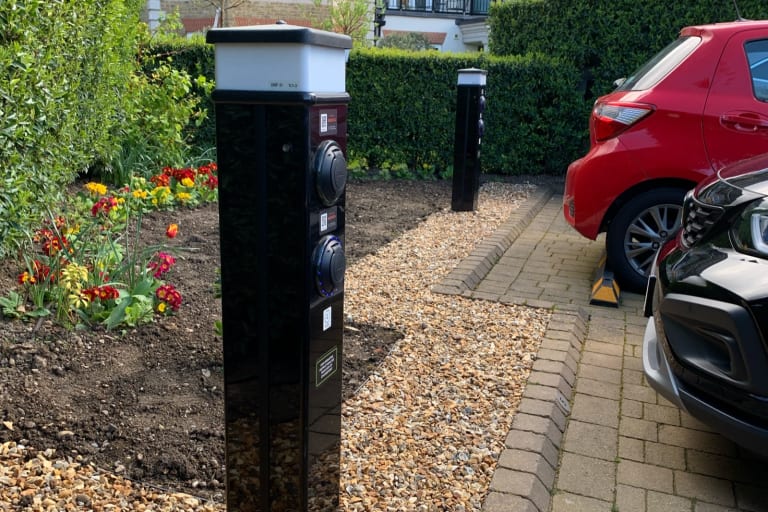
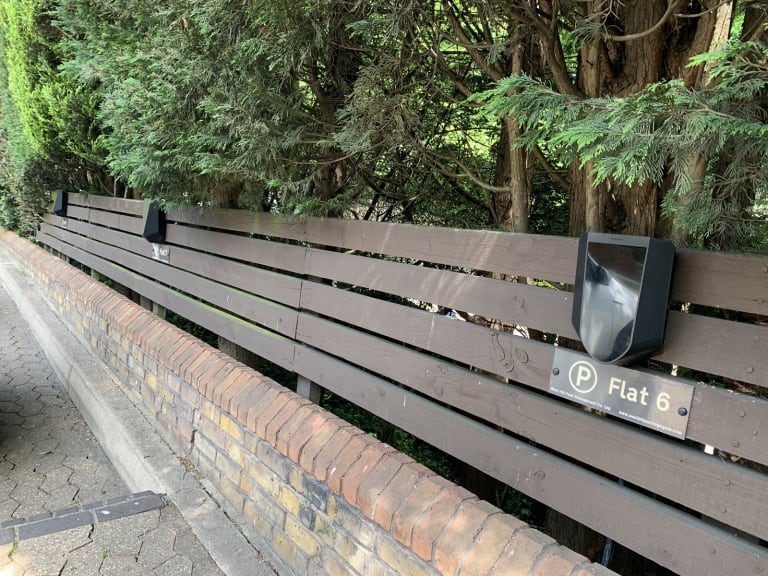
For existing apartments with off street parking, most charger installations fall under permitted development rights. No planning permission is required provided the installation meets size limits. Charge point outlets must not exceed 0.2 cubic metres. Upstands must not exceed 1.6 metres near dwellings or 2.3 metres elsewhere.
Listed buildings, scheduled monuments, and some conservation areas where article 4 directives apply require planning approval. New apartment buildings must comply with Part S building regulations rather than permitted development rights. We advise on planning requirements during site surveys.