When do EV chargers count as permitted development?
Permitted development rules for EV chargers were updated in May 2025 to make installations easier. Most apartment car park installations qualify.
The charger must be installed within an area lawfully used for off street parking. Wall mounted units cannot exceed 0.2 cubic metres in size. Freestanding units within the curtilage of a block of flats must not exceed 1.6 metres in height.
The installation must serve the building’s residents. The building cannot be listed. The good news is that most standard apartment car parks meet all of these criteria without any additional applications.
When You May Need Planning Permission
Listed buildings require listed building consent for any external alteration. This is a separate process from standard planning permission.
Conservation areas have different rules depending on charger visibility. Chargers on the front elevation or visible from the street typically require approval, even without a formal Article 4 direction. Installations in rear car parks or underground locations usually qualify for permitted development. Some conservation areas also have Article 4 directions that remove permitted development rights entirely. Your local authority can confirm what applies.
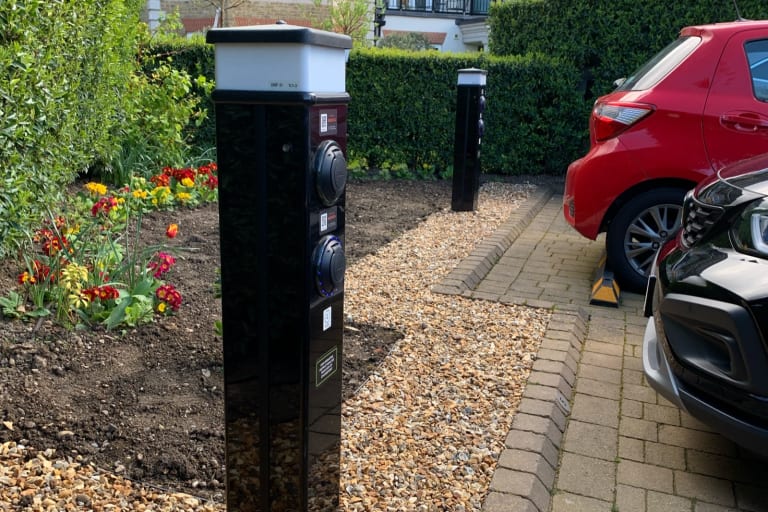
Visible external changes can also trigger requirements. Large cabinets, significant groundworks, or multiple freestanding charging posts in a prominent location may require approval.
Do leaseholders need the freeholder’s consent for an EV charger?
Planning permission and leaseholder consent are two separate requirements. Even when planning permission is not needed, flat owners and leaseholders must obtain written consent from the freeholder or management company before installation. This is often called a Licence to Alter and is a standard legal step for any building alteration.
We can provide the technical documentation and installation plans that your freeholder or managing agent will need to review. This is a normal part of the process and we help with it regularly.
How to Check Requirements
Your local planning authority can confirm whether your installation needs approval. We provide documentation showing proposed installation locations, charger specifications, and dimensions. This gives the planning department everything needed for a quick determination.
We include this check as part of the site survey process.
Listed Buildings and Conservation Areas
We have installed chargers in conservation areas and listed buildings. The key is sympathetic design that minimises visual impact.
Wall mounted chargers in matching colours work well. Concealed cabling and rear location installations usually gain approval. Listed building consent applications can take longer than standard planning permission. The exact duration depends on your local authority and the complexity of the installation. We factor additional time into project timelines where relevant.
Which building regulations apply to EV chargers in flats?
Building regulations are separate from planning permission. All EV installations must comply with Part P electrical safety standards and the Electric Vehicles (Smart Charge Points) Regulations 2021. Your installer must also notify the Distribution Network Operator before installation to confirm the local supply can support the additional load. We handle all of these requirements as part of our installation service.
Underground and Covered Car Parks
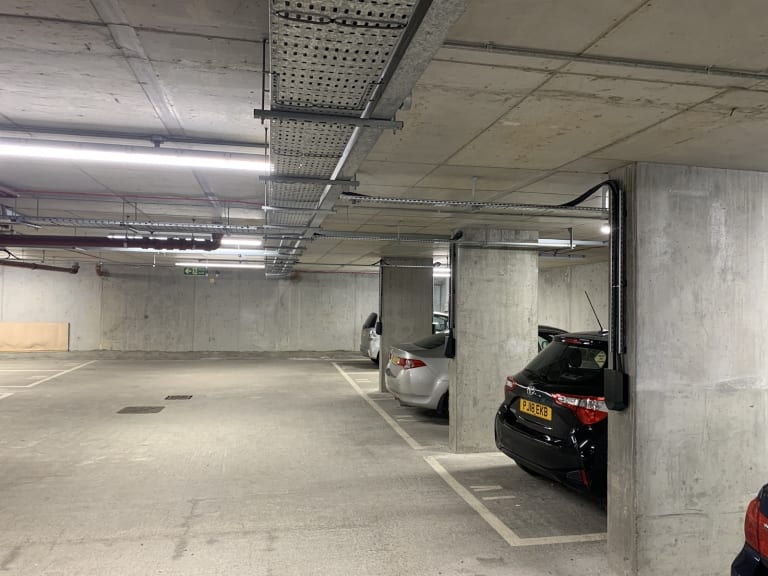
Underground and covered car parks often qualify for permitted development because chargers are not visible from outside. Fire safety is the main consideration in these locations. A fire risk assessment is required before installation to check how chargers affect existing safety measures, including ventilation, egress routes, and spacing. We carry out this assessment as part of the site survey and advise on any modifications needed.