Electrical Supply Capacity
Each 7kW charger draws up to 32 amps on a single phase. A building with 10 chargers running simultaneously would need 320 amps of spare capacity. Most apartment blocks do not have this available. This is where load management becomes essential.
Apartment buildings typically have three phase supplies ranging from 100A to 400A. Older properties may have single phase supplies of 60A to 80A that require a DNO upgrade. We assess your existing demand and identify spare capacity. Then we design the charging infrastructure to fit within your supply.
Load Management Systems
Load management is the technology that makes apartment charging practical. It monitors total building demand in real time and adjusts charging speeds automatically.
When building demand is low, chargers run at higher speeds. When other systems need power, charging slows down. For example, four chargers sharing a 40A circuit would each receive around 10A during simultaneous use. Overnight, when fewer vehicles are active, each charger draws more power. This means you can install more chargers than raw capacity allows without expensive supply upgrades.
All chargers installed after 30 June 2022 must be smart chargers under the Electric Vehicles (Smart Charge Points) Regulations 2021. Smart functionality includes remote monitoring, off peak charging schedules, and grid response capability. This is built into all the chargers we specify.
Distribution Infrastructure
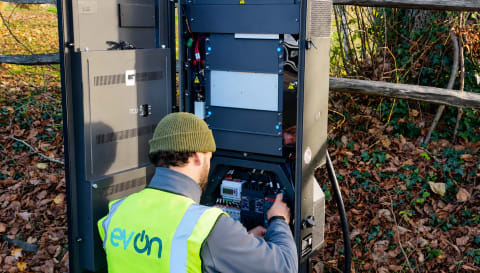
Most apartment charging projects require a new distribution board dedicated to the EV network. This separates EV load from the building domestic supply and simplifies metering. All circuits must comply with BS 7671 Section 722, which requires RCD protection rated at 30mA and appropriate earthing arrangements. This is standard practice for any qualified installer.
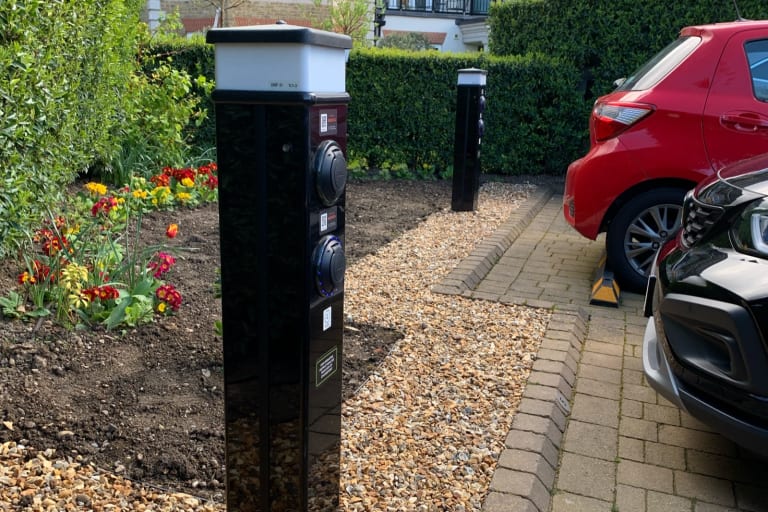
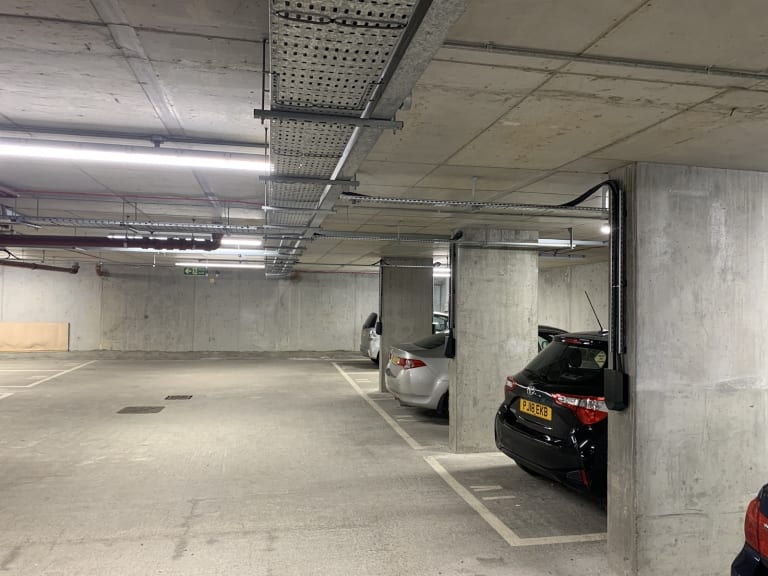
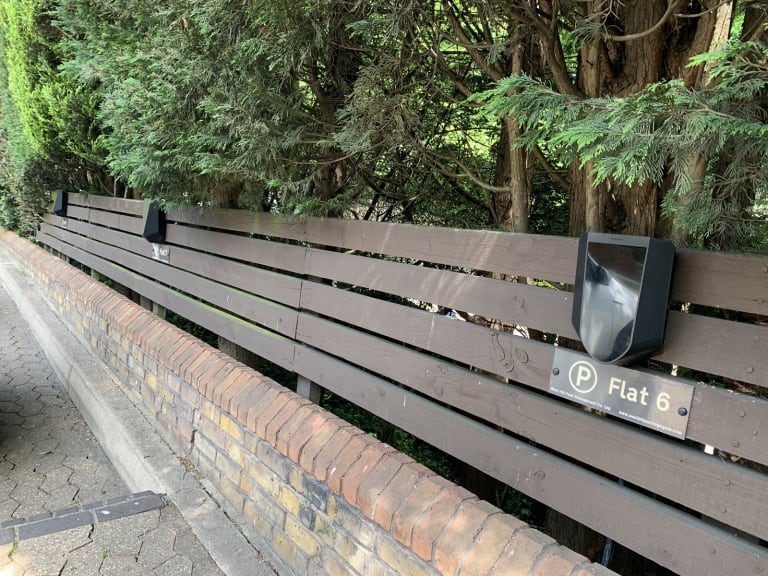
The distribution board connects to individual chargers via armoured cable or flat cable systems. Underground car parks often use flat cable networks that mount directly to walls or ceilings. Surface car parks typically use traditional armoured cable in underground ducting.
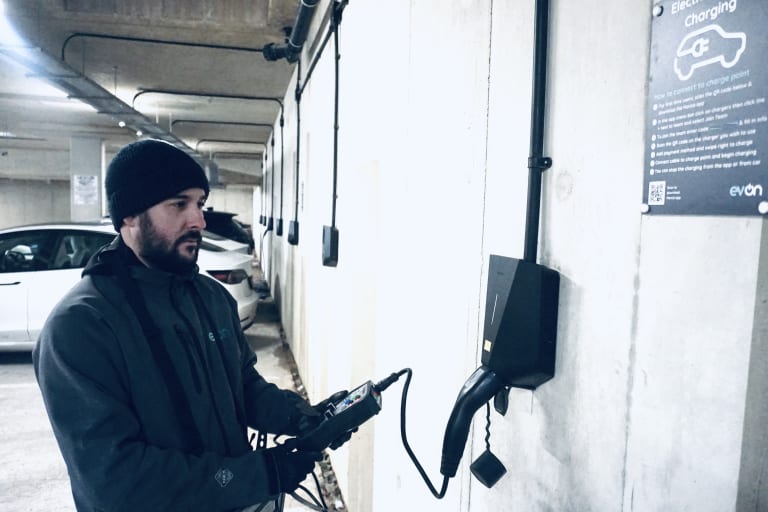
For underground or covered car parks, a fire risk assessment is required under OZEV interim guidance from 2023. This covers ventilation, fire detection, vehicle spacing, and thermal monitoring. We complete this as part of every underground installation.
DNO Notifications and Upgrades
Any new EV charging installation must be notified to the Distribution Network Operator. For small installations within existing capacity, this is a simple notification taking 2 to 3 weeks. Standard upgrades such as new fuses or minor reinforcement typically take 8 to 12 weeks. Complex projects requiring new substations can take significantly longer. We manage all DNO communications and applications on your behalf.
The Residential Landlord Chargepoint Grant covers 75% of socket cost, up to £500 per socket and 200 sockets a year. The infrastructure grant that funded cabling and groundworks closed on 31 March 2026, so supply and DNO upgrade costs now sit with the building. The application deadline for the socket grant is 31 March 2027. The government reserves the right to end the scheme with 4 weeks notice so starting early gives you the best chance of securing funding.
Buildings undergoing major renovation with more than 10 parking spaces must also comply with Part S building regulations. This requires at least one chargepoint per dwelling plus cable routes for remaining spaces. We can advise whether this applies to your project.