Smart Charging in Plain Terms
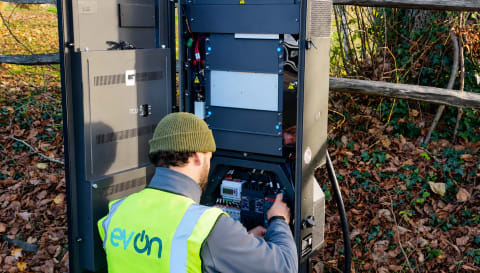
A basic charger is like a tap. Power on, power off, and nothing in between. A smart charger is online. It connects to the internet, talks to a management platform, and can be told what to do, or work it out for itself.
That one difference is what lets a charger shift to cheaper hours, slow down when the building is busy, record who charged and how much, and show you its status from your phone. Everything useful about modern EV charging rests on that connection.
It Is the Law, and That Works in Your Favour
Since 30 June 2022, UK law has required every new home and workplace charger to be smart. The rule is the Electric Vehicles (Smart Charge Points) Regulations 2021. It applies in England, Scotland and Wales, with Northern Ireland on separate arrangements, and the responsibility sits with whoever sells the charger, not with you.
In practice this is good news. Every reputable charger already meets the rules, so there is nothing for you to check, apply for, or worry about. We only fit compliant units and set them up correctly. Public and rapid chargers sit in a separate category and fall outside these particular rules.
What a Smart Charger Does for You
The connection unlocks five things a basic charger cannot do.
Cheaper charging. It defaults to off peak hours, when electricity is cheapest.
Load sharing. It talks to the other chargers and to the building, so it never pulls more power than the supply can give. This is load balancing, and it is what lets you add more chargers without a supply upgrade.
Billing. Every session is logged by user, energy used, and cost, so the right person pays.
Access control. Only approved drivers can charge, using an app, a card, or a PIN.
Remote monitoring. You, or our team, can see every charger’s status and get an alert the moment one develops a fault.
Charging When Power Is Cheapest
Left to its default, a smart charger avoids the busiest, priciest times of day: 8am to 11am and 4pm to 10pm on weekdays, with weekends unrestricted. It waits for the quieter, cheaper hours instead. Charging off peak at around 8 to 12p per kWh rather than 25 to 30p at peak can cut charging costs by 20 to 40 percent. A driver who needs a fast top up can override this at any time.
Keeping the Grid Steady
If every car plugged in at 6pm, the local network would struggle. Smart chargers prevent that in two ways. They spread demand by defaulting to quieter hours. And each one waits a short, random moment before it starts, up to 10 minutes by default, so a whole street does not surge at once.
They can also ease their power when the grid asks them to. Some sites are even paid for offering that flexibility, through grid balancing schemes run by the network.
What If the Internet Drops?
A fair worry, and an easy one to settle. A smart charger keeps charging your car even if it loses its connection. The clever features pause, the charging itself does not. The regulations also build in security standards, so the connection is protected. We configure all of this during installation, so it simply works.
The Same Standard Everywhere
Smart charging is not specific to one setting. The apartment block that needs per resident billing, the workplace sharing power across staff cars, and the fleet depot scheduling vans overnight all rest on the same smart foundation. It is built into every charger we install, not bolted on afterwards.