We ran cables 50 metres beneath the hospice grounds using horizontal directional drilling, crossing under the main entrance and visitor gardens without a single trench. Five 22kW Easee chargers now serve staff, visitors, and the public. £4,250 in OZEV grant funding secured.
The Hospice of St Francis provides end-of-life care in Berkhamsted, Hertfordshire. The team wanted EV charging for staff, visitors, and the public, but any installation had to respect the peaceful environment. Here is a snapshot of what we delivered.
| Property Type | Hospice / Healthcare Facility |
| Location | Berkhamsted, Hertfordshire |
| Chargers Installed | 5 x Easee Home 22kW |
| Install Method | Horizontal Directional Drilling (50m) |
| Drilling Depth | Approximately 2 metres |
| Base Type | 5 x Pre-fabricated Concrete (100kg each) |
| Electrical | New Fuse Board with Expansion Capacity |
| Funding Secured | £4,250 (OZEV Grant) |
| Access Type | Public, Staff, and Visitor Charging |
| Client | The Hospice of St Francis |
The Hospice of St Francis came to us after other installers had struggled with the site. Previous quotes proposed traditional trenching that would have disrupted the grounds for weeks. The hospice needed an installer who could deliver the infrastructure without affecting patients, families, or daily operations. The team had clear goals: charging for staff, visitors, and the public, with revenue flowing back to support their charitable work. They also wanted the charging area to look like a deliberate improvement, not an afterthought bolted onto the car park.
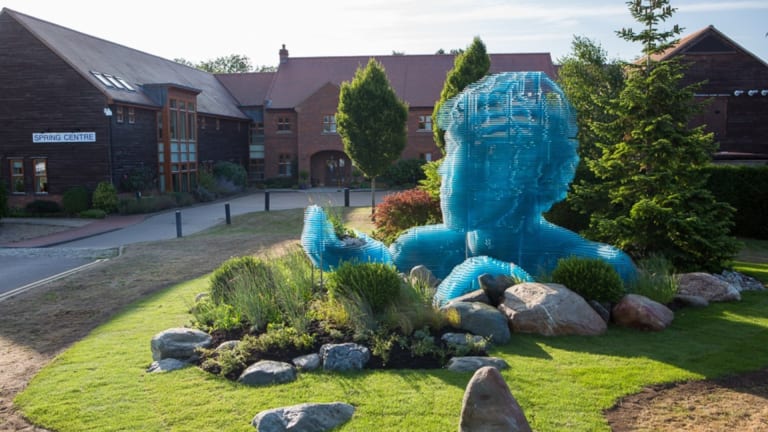
The Hospice of St Francis provides end-of-life care in a carefully maintained, peaceful setting. Patients, families, and staff depend on an atmosphere of calm and dignity. Any construction work had to respect this environment completely. Traditional trenching would have torn up pathways, closed sections of the grounds, and created noise and disruption for weeks. The hospice operates 24 hours a day, with visitors arriving at all hours. The installation could not affect the experience of anyone using the facility.
The main electrical intake was located inside the building, 50 metres from the proposed charging location. The cable route had to cross the main entrance, visitor gardens, and landscaped areas. Open trenching would have left visible scarring across the site and required weeks of reinstatement. Running cables along the surface or through the building interior was not acceptable. The grounds at The Hospice of St Francis are part of the care environment, and any damage would have been noticed immediately. A different approach was needed.
The hospice operates around the clock. Deliveries, emergency services, and visitors need uninterrupted access at all times. The main entrance could not be closed or blocked during the installation. Any work causing noise or creating obstructions would have affected patients and families during an already difficult time. The installation team had to work around the hospice's operations without requiring any changes to their schedule. This meant careful planning and an installation method that would not close roads, paths, or parking areas.
I am thrilled with the service and results EV-ON provided for our hospice. From the initial consultation to the final installation, their team showed remarkable professionalism, efficient project management, and clear communication throughout. The speed and attention to detail with which they executed the project were truly impressive. The finished product exceeded our expectations, blending with our surroundings and providing a convenient and sustainable charging solution. I highly commend EV-ON for their expertise, dedication, and outstanding service.

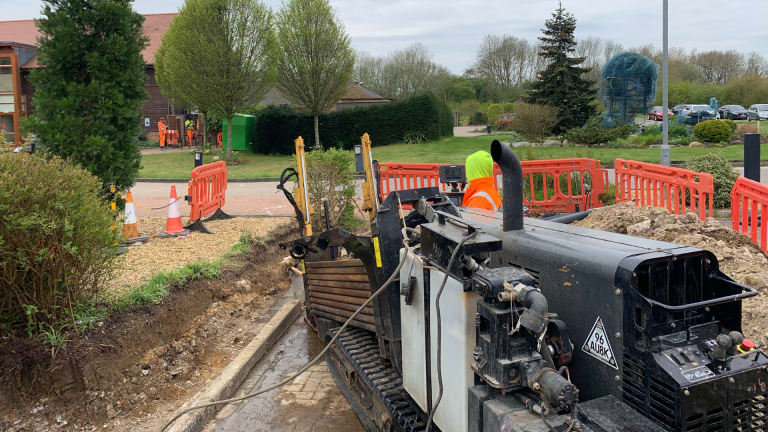
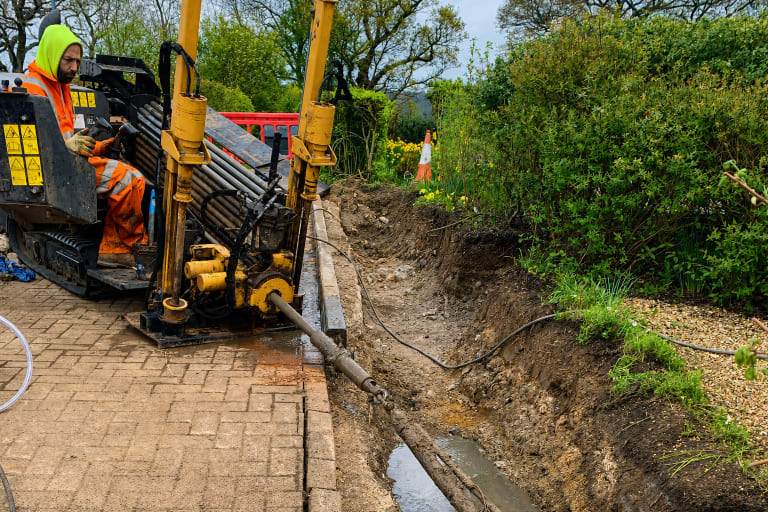
We used Horizontal Directional Drilling to install service ducts beneath the grounds without breaking the surface. A specialist HDD rig was positioned at the starting point, with the exit pit located 50 metres away at the charging location. The process began with a pilot bore, a small-diameter hole drilled along the planned route using a steerable drill head. A specialised scanner tracked the drill head in real time, providing position and direction data at approximately 2 metres below ground level. Once the pilot bore reached the exit point, we attached a reamer and pulled it back through the bore, widening the hole and installing multiple cable ducts in one pass. The entire 50-metre underground run was completed in a single day.
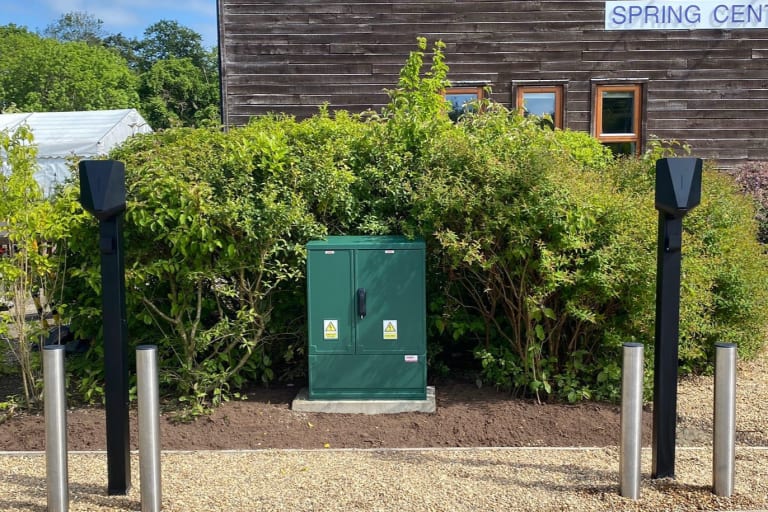
We installed a new fuse board housed in a GRP enclosure at the charging location. The enclosure protects the electrical equipment from weather while keeping it accessible for maintenance. The fuse board was specified with expanded capacity built in from the start. The hospice can add more chargers in the future without needing further groundworks or panel upgrades. We also installed ducting between the five charger bases. If cables ever need replacing or upgrading, they can be pulled through without excavation. This forward-thinking approach means the infrastructure will serve the hospice for years to come.
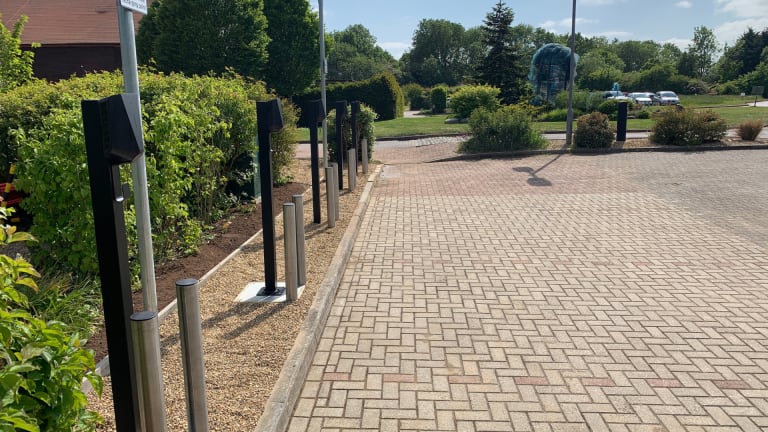
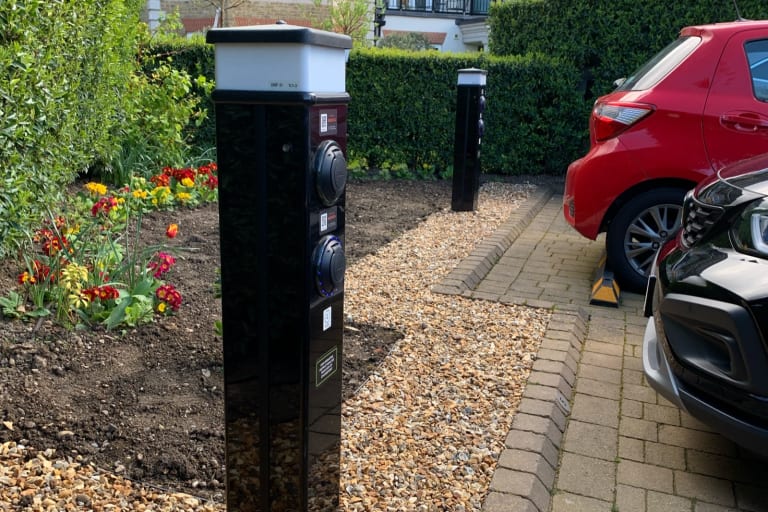
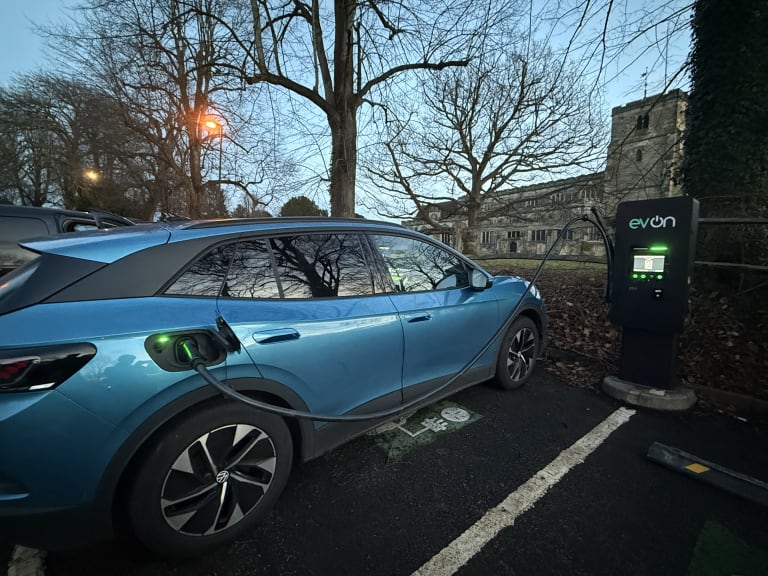
We positioned five pre-fabricated concrete bases, each weighing 100kg, for pedestal alignment across the charging bays. Each Easee 22kW charger was mounted, tested, and connected to our management platform. We also installed new lamp post lighting to improve visibility and safety in the charging area. After installation, we landscaped the entire area with new borders, planting, and surface finishes. The result is a professional, welcoming amenity that matches the care the hospice puts into the rest of its grounds. The chargers are open to the public, not just staff and visitors. Drivers pay per kWh through the integrated payment platform, generating revenue that flows back to support the hospice's work.
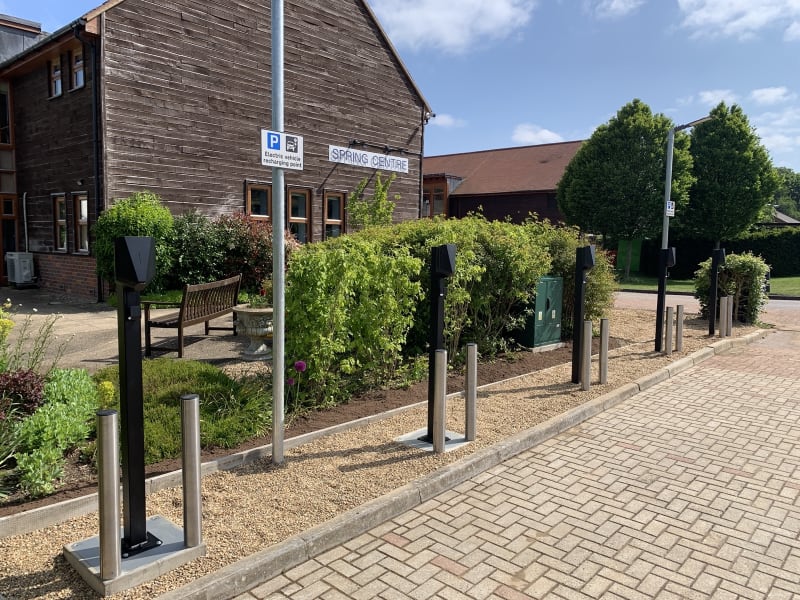
The Hospice of St Francis now has five EV charging points without any visible impact on the grounds. The 50-metre cable run sits approximately 2 metres underground, crossing beneath the main entrance, visitor gardens, and landscaped areas without a single trench or surface cut. The drilling process saved multiple days of disruption and avoided closure of the main entrance. Patients, families, and staff saw no interruption to their daily routine.
The landscaped charging area has transformed the space into a welcoming amenity. New borders, planting, lamp post lighting, and surface finishes mean the chargers sit within a setting that reflects the hospice's attention to care. What was a plain car park area is now an attractive, purpose-built facility that the hospice is proud to show visitors.
The £4,250 OZEV grant reduced costs significantly. The electrical infrastructure is built to support additional chargers as EV adoption grows, with ducting in place for future cable upgrades. The hospice has opened the chargers to the public, generating ongoing revenue to support their charitable work. Over time, the chargers will pay for themselves and continue to benefit the organisation for years to come. Our team monitors all five units remotely and handles any maintenance issues directly.


Every project surveyed, installed, commissioned and monitored by our own team. Grants secured and managed end to end.
View all case studiesTell us about your site. We survey, explain your options, and give you a clear quote with no obligation.
Enter your details below and one of our solar experts will be in touch.