HDD in Plain Terms
When chargers sit a long way from the electricity supply, the cable has to travel to reach them. The old way is to dig a long open trench along the whole route, lay the cable, then put everything back.
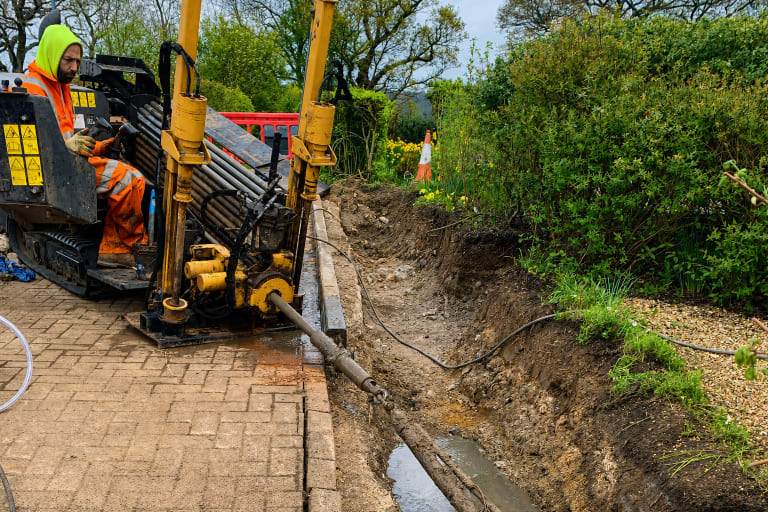
HDD does the same job without the trench. A drill enters the ground at one end, travels along a planned route underground, and comes up at the other. The surface above is left untouched. It is the difference between keyhole surgery and open surgery: the same result, far less disruption.
How It Works
There are three stages.
First, the pilot bore. A steerable drill head is pushed through the ground along a planned route. The path is gently curved, not a straight or perfectly level line. The operator tracks the head from the surface the whole way and steers it around existing pipes, cables and obstacles.
Second, reaming. A wider cutting head is pulled back through the pilot hole to open it up to the size needed.
Third, pullback. The cable ducts are pulled back through the widened hole, ready for the cables to go in. On a smaller job this can be done in a single pass.
The bore runs deep enough to pass cleanly beneath everything in its path. On our hospice project that was around 2 metres down.
Why It Matters: No Trench, No Mess
A trench across a car park, a garden or an entrance road means dug up surfaces, barriers, and weeks of putting it all back. HDD avoids that. It crosses under tarmac, block paving, lawns, driveways and roads without opening them, so there is nothing to reinstate afterwards. No closed roads. No parking bays blocked for days. On any site with surfaces or landscaping to protect, it is the faster and tidier route.
At the Hospice of St Francis we ran the cable 50 metres beneath the grounds, under the main entrance and the visitor gardens, in a single day. Not a single trench, and patients, families and staff carried on as normal.
When We Use It, and When We Do Not
HDD is not always the answer, and we will tell you straight. On an open, clear run with nothing to protect, a simple trench can be quicker and cheaper, so that is what we use. HDD earns its place when there are surfaces, gardens, roads or live services in the way.
It does need proper planning first. We survey the ground and locate the existing utilities so the drill follows a safe, designed route rather than a guess. That groundwork is what keeps the install day quick and clean.
Is It Safe and Proven?
Yes. HDD is an established technique used across the country to install power, water and telecoms underground. The route is designed in advance and the drill head is tracked from the surface for its whole journey, so it stays clear of existing services. It is not a magic wand, which is exactly why the survey and planning matter. Done properly, it is the cleanest way to get power to where your chargers need to be.