Assessing Existing Electrical Infrastructure
Older buildings typically have smaller electrical supplies than modern developments. We assess the current supply, existing demand, and spare capacity during the site survey.
Many older buildings have three phase supplies ranging from 100A to 200A. With modern load management, this can support 5 to 15 chargers depending on existing building load and charger configuration. Our survey identifies exactly what your building can accommodate.
If the existing supply is insufficient, options include upgrading the main supply. The OZEV grant that funded supply upgrades closed on 31 March 2026, so this cost now sits with the building. You can also install a separate EV supply or reduce the number of chargers to fit available capacity. We advise on the most cost effective approach for your situation.
Cable Routing Solutions
Running cables through older buildings requires creativity. Common approaches include surface mounted trunking, flat cable systems, existing service routes, and external routing.
Surface mounted trunking runs cables along walls in protective channels. These can be colour matched to minimise visual impact.
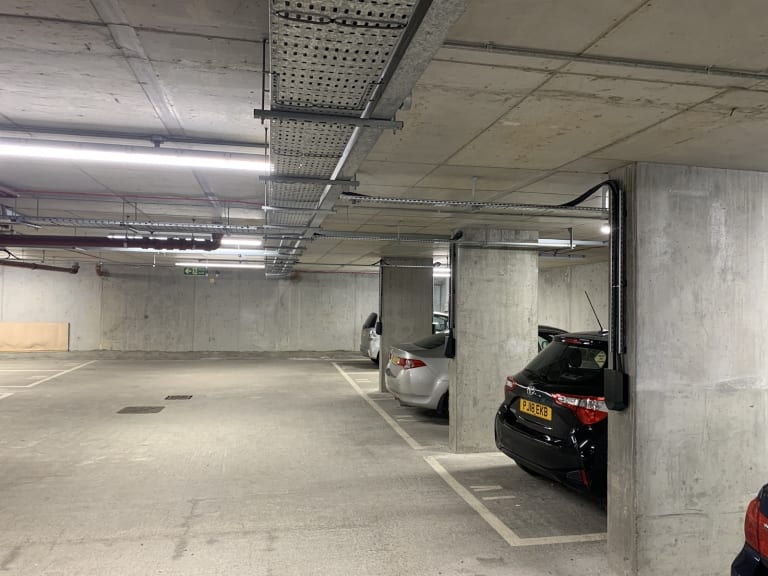
Flat cable systems use low profile cables that mount directly to car park walls or ceilings. These are popular in basement retrofits where aesthetics matter.
Existing service routes use cable ducts, risers, or service corridors to avoid new penetrations through walls.
External routing runs cables around the outside of the building where internal routes are impractical.
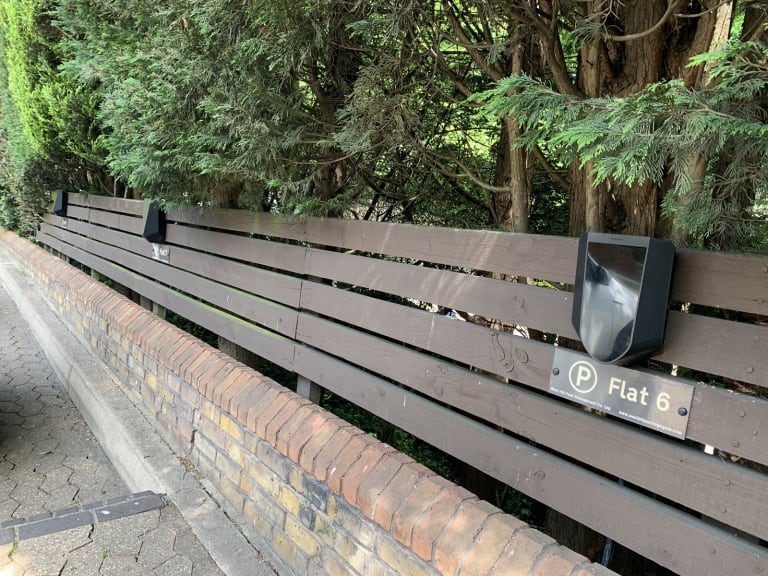
At Wickliffe Court, we routed individual charger cables to each flat’s electrical supply via concealed containment. This avoided communal billing complexity while preserving the building’s appearance.
Distribution Board Upgrades
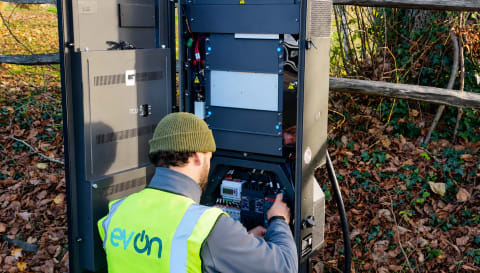
Most retrofits require a new distribution board dedicated to the EV network. This separates EV load from the building’s domestic supply and makes metering straightforward.
The new board typically installs in an existing plant room or electrical cupboard. Where space is limited, compact solutions are available. All new chargers must comply with UK smart charging regulations, which we handle as standard.
Dealing with Limited Space
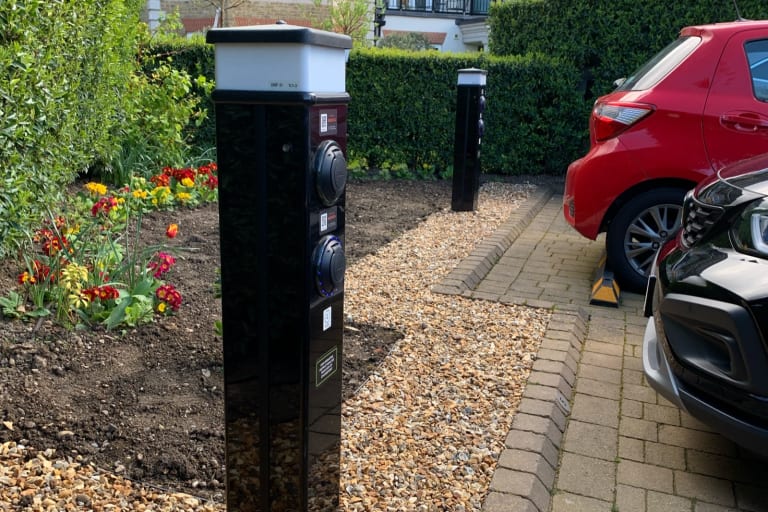
Older car parks often have narrower bays and tighter layouts than modern standards. Wall mounted chargers work better than freestanding posts in tight spaces. We design charger positions to maximise accessibility while avoiding obstruction.
Listed Buildings and Conservation Areas
Older buildings are more likely to be listed or in conservation areas. These require planning permission (Listed Building Consent) for EV charger installations. The good news is that this does not prevent installation. It simply requires appropriate approvals, which we can guide you through.
We have completed installations in listed buildings with planning approval. Careful design minimises visual impact while meeting heritage requirements.