Who owns the EV chargers in our block, the freeholder or the charging company?
In most apartment blocks, ownership depends on the agreement that was signed when the chargers were installed. In a newer development the developer usually chose the chargers and signed that agreement before anyone moved in, so the block inherited both the equipment and the contract. In an older block the chargers were added later, often under a previous managing agent, and the paperwork does not always follow when the agent changes. Either way, the agreement is the place to start, because it sets out who owns the chargers and who has the right to run them.
Usually the chargers run off the communal supply, but they are connected to a management platform run by a charge point operator, and it is the operator who sets the price per kWh that residents pay. That means the chargers may sit on the building’s electricity supply yet still be owned and operated by the charging company. In some blocks the building owns the units and the operator only manages them, and the agreement is what tells you which arrangement applies.
Once you have the agreement, there are four things to check:
- Who owns the chargers.
- Whether the operator has exclusive rights to provide charging on the site, and for how long.
- How the contract ends and how much notice is needed.
- Who removes the equipment afterwards and who pays to make good.
If no agreement can be found, equipment fixed to the building is normally treated as part of the building, which puts the chargers with the block rather than the operator. We have been through this with other blocks, so if you are not sure where yours stands, send us what paperwork you do have and we will tell you what it means before anything is removed.
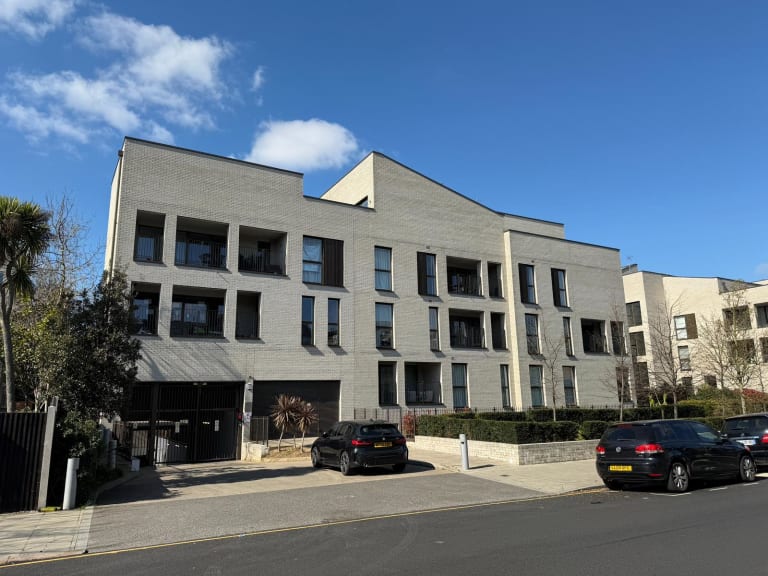
To give an example, at Alpine Place in Brent the original chargers were installed by the developer during construction in 2015, and no agreement or paperwork for them was handed over when the block was occupied. The management company had no agreement, no operator and no billing in place. The chargers were on free vend with nobody managing them and the electricity went through the service charge with no way to recover it.
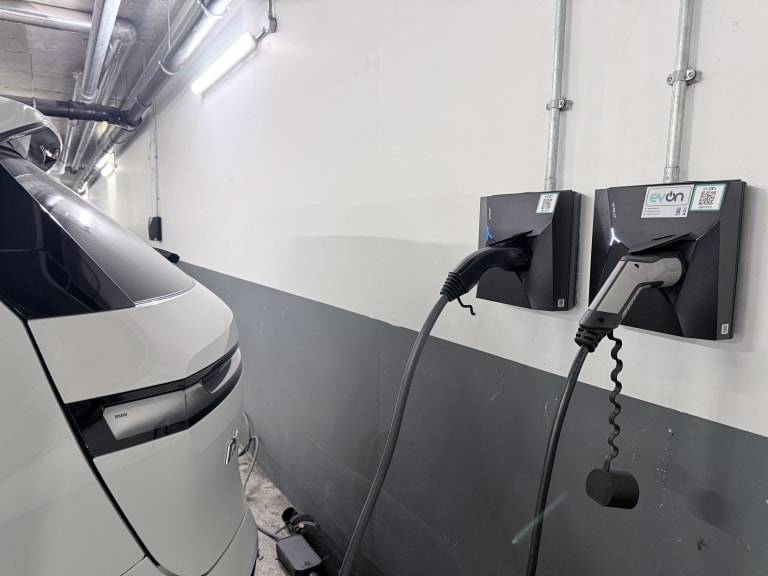
We stripped them out, replaced the distribution board and installed 28 new 22kW chargers with infrastructure supporting a further 27 bays. Our management platform now bills each resident per kWh at the rate the building pays its supplier, residents pay for what they use and the service charge no longer covers anyone’s charging.
Does the £500 chargepoint grant apply when replacing EV chargers in a block?
It can. The Residential Landlord Chargepoint Grant pays up to £500 per socket, up to 200 sockets a year, until 31 March 2027. A freeholder, a residents’ management company, a right to manage company or a managing agent can apply. Whether a block qualifies depends on the building and on why the original chargers were installed, so we check eligibility for every block before we quote, prepare and submit the application, and deduct the grant from the invoice. The application must be approved before any unit is installed, which is why it goes in as soon as the survey is done.
The separate grant that funded cabling and distribution boards closed on 31 March 2026. Reusing the existing infrastructure is now the main way to keep the cost of a replacement down.
What does switching EV charging provider in a block of flats involve?
Switching EV charging provider in a block of flats follows six steps, and the first two cost nothing.
- Find the old agreement and confirm it has ended or can be ended. If the old provider has already gone, the chargers usually stay on the wall switched off until the block decides whether they are adopted, replaced or removed.
- Book a survey. This checks the supply, whether it is single or three phase, the distribution board and every cable run, because reusing sound cabling is where most of the saving is.
- Decide, unit by unit, whether each charger is kept, adopted or replaced. A charger can be kept where it supports OCPP, the open standard that lets it talk to any management platform.
- Submit the grant application and wait for OZEV approval before anything is installed.
- Install the new units with a load management device on the communal supply. It monitors the building’s total load and reduces charging when the lifts or pumps are running, so the supply is never exceeded.
- Hand over the platform with the kWh rate set by the block, usually at the building’s electricity tariff plus a small margin, the app live for residents and remote monitoring switched on.
Where the old chargers still work, we adopt them onto our management platform and set up resident billing, so the service charge stops paying for charging and non EV drivers are no longer covering EV drivers’ usage. Where they need replacing, new chargepoints can qualify for the £500 per socket grant, and we handle the application as part of the job.
At The Avenue in Kilburn we replaced 24 legacy sockets this way, with load management on the existing supply, and the block did not need a supply upgrade. For the full service, including case studies, see our apartment block EV charging page.