Can the existing cabling and supply be reused when replacing EV chargers in a block?
In most blocks, yes, and it is where most of the saving is. The cables from the distribution board to each bay, the containment and the supply itself are the expensive part of the original installation. A charger can be swapped on the end of a sound cable in the same way a light fitting can. What has to be checked is whether the cable and the protection behind it were sized for the new unit. A cable installed for a 7kW single phase charger will not carry a 22kW three phase one. Older installations sometimes ran every charger off one shared circuit, so the more cars that charged at once the less each one got, which is why we recommend a survey to look at the fuse board and the electrical infrastructure closely.
The protection matters as much as the cable. Current standards require RCD protection on every charger circuit and open PEN fault protection, which disconnects the charger if the incoming earth is lost, and many older installations have neither. Load management is the other change, because far more residents want to charge now than ten years ago, and a set of chargers installed when two people had an EV cannot simply be swapped one for one when twenty do. None of this makes an upgrade expensive. With the funding available, a block can bring its whole system up to a newer, compliant, load managed network at low cost, and in many cases a faster one.
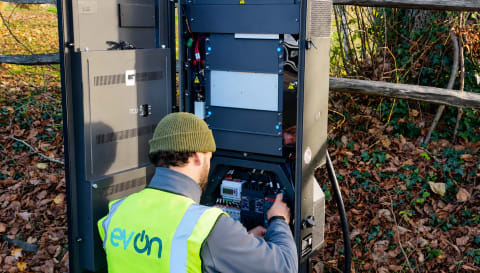
During the survey we check the following:
- The incoming supply, and whether it is single or three phase.
- The distribution board, its spare capacity and the protection on each charger circuit.
- Every cable run, its size and its condition.
- The protection on each circuit, RCD and open PEN.
- The units themselves, and whether any can be kept rather than replaced.
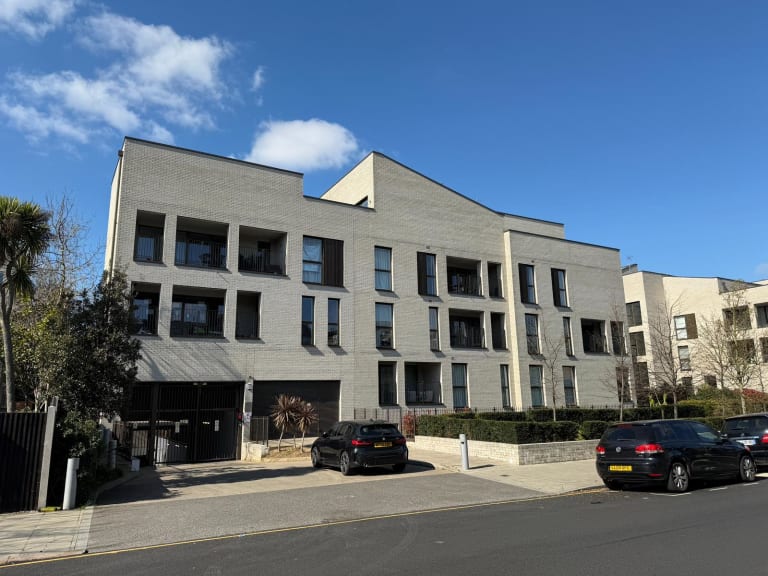
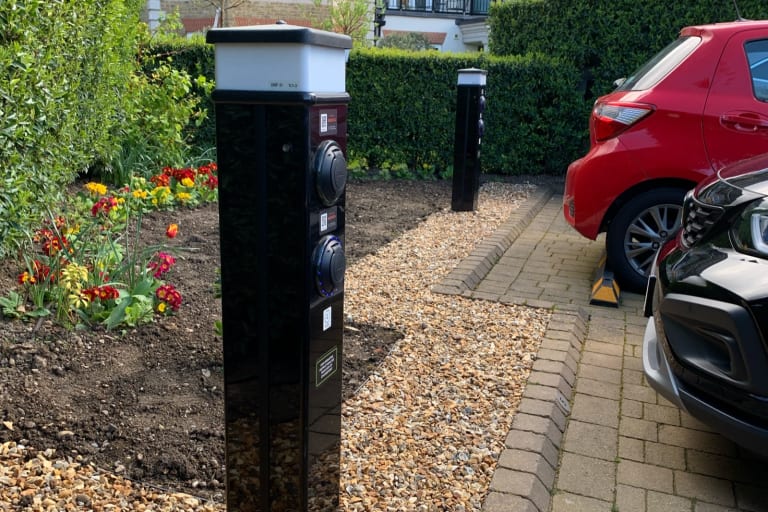
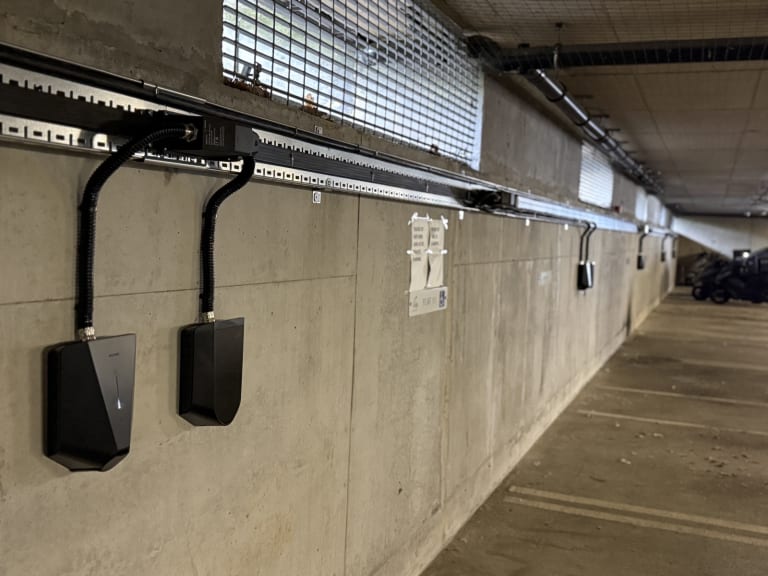
To give an example, at The Avenue in Kilburn we replaced 24 legacy 3 pin sockets with 7kW chargers on the existing supply. We upgraded the distribution board with new protection for each circuit and added load management so the building never exceeds its capacity. The chargers went onto our management platform, which handles automated billing for the residents, so non EV drivers are not covering the electricity through the service charge. No supply upgrade was needed and the work took four days without any loss of parking. At Alpine Place in Brent the opposite applied. The original fuse board fed every charger from one shared 40 amp circuit, which could not support even 7kW charging once more than a couple of cars were plugged in, and it had to be replaced before anything else could go in. We stripped the old units out, fitted a new fuse board with properly sized protection, and installed 28 new 22kW chargers with infrastructure to a further 27 bays, so the block went from chargers that could not deliver 7kW to a network that will not need touching as more residents switch.
Should the replacement EV chargers be 7kW or 22kW, and does the block need a bigger supply?
If the block can have 22kW, it is the better choice. A 22kW three phase network is more balanced across the building, and it is there for the vehicles now coming onto the market that can charge at those faster rates. Load management plays a large part here, because a set of 22kW chargers is only ever drawing what the supply can spare. A 7kW charger still fills a typical battery overnight, so a block that stays single phase is not left short, and the decision comes down to cost.
Where the original chargers were single phase 7kW units, moving to 22kW means modifications to the cabling feeding the chargers, and sometimes to the supply cabling behind them. That is where the cost starts to increase. Replacing chargers like for like does not change what the building draws. A load management device on the communal supply monitors the building’s total load and reduces charging when the lifts or pumps are running, so a bigger supply is rarely needed.
Following the survey we give a cost for a straight swap, and an alternative price to upgrade the system to a 22kW three phase network, so the block can decide with both in front of it. Both options can be eligible for the £500 per socket saving on the charger hardware, which brings the cost of either down.
How much does it cost to replace the EV chargers in a block of flats?
With the £500 per socket grant applied, a like for like replacement on existing cabling would cost from £450 to £750 including VAT per charger, depending on the charger specification, supplied, fitted, commissioned and certified. Before the grant that is from £950 to £1,250 including VAT, so where the block qualifies the grant is close to half the cost of each charger. That covers removal and disposal of the old unit, the new charger, its connection to the management platform and the electrical testing that goes with it. A block that needs work on the fuse board pays for that on top, and the survey allows us to price that accurately.
New chargepoints can qualify for the £500 per socket grant, and how it applies to a replacement is on our switching EV charging provider page. Whether a block can claim it depends on the building and on why the original chargers were installed, which is why we check eligibility before we quote. Chargers installed to meet Part S of the Building Regulations on a new build are a different case from chargers a block chose to add later. The full service, including case studies, is on our apartment block EV charging page.