What Part S Requires
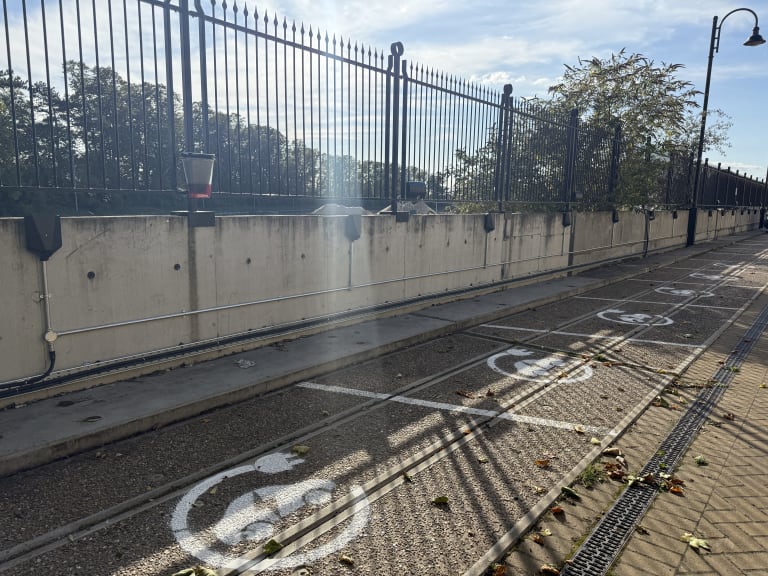
The requirements are straightforward for new non residential buildings with more than 10 parking spaces. Install one active charge point, ready to use from day one. Then install cable routes to at least one in five of the total number of parking spaces. These cable routes are passive infrastructure, meaning the ducting and cabling are in place so a charger can be connected later without digging up the car park. Rounding rules are set out in Approved Document S and we apply these as standard on every project.
The installed charge point must meet the relevant electrical safety standards, including BS 7671 Section 722. Where the charger is in scope of the Electric Vehicles (Smart Charge Points) Regulations 2021, smart functionality is also required. We handle both requirements as part of every installation.
Buildings with 10 or fewer parking spaces are exempt. Listed buildings where installation would harm the character of the building are also exempt. A grid connection cost cap also applies. Where the cost of the incoming electrical supply exceeds £3,600 per charge point connection, the number of charge points required can be reduced. This is evidenced with DNO quotes and we manage this process for you.
Part S vs the Workplace Charging Scheme
Part S is a building regulation in England. The Workplace Charging Scheme is a separate government grant with its own eligibility criteria. They serve different purposes.
If your building is a new build or undergoing a major renovation (meaning significant work to the building, its car park, or its electrical infrastructure), Part S sets the minimum. Where Part S applies, check with your building control body and the grant guidance whether additional chargers beyond the minimum are eligible for WCS funding.
For existing buildings adding chargers voluntarily, Part S does not apply at all. The Workplace Charging Scheme funds this type of project, covering up to 75% of costs capped at £500 per socket. We handle the grant application as part of the project.
How Different Building Types Are Treated
The rules differ depending on building type. For non residential buildings, the one active charger plus cable routes to one in five of total spaces formula applies as described above.
New homes must have one active charger per dwelling. Shared residential parking follows a separate formula set out in Approved Document S.
Part S applies in England only. Scotland introduced its own EV charging standard (Standard 7.2) from 5 June 2023 under the Building (Scotland) Regulations. Wales and Northern Ireland have separate requirements. We advise on compliance across all regions.