Why Speed and Supply Matter
A 22kW charger adds roughly 80 to 90 miles of range per hour, compared to 30 miles per hour from a 7kW unit. For a commuter who arrives with 50% battery, a 22kW charger can deliver a full top up in under 2 hours, freeing the bay for another driver. Higher turnover per socket means fewer chargers can serve more people.
Most current EVs have 11kW onboard chargers, so they will draw 11kW even on a 22kW unit. That is still 57% faster than 7kW. As manufacturers increasingly ship 22kW capable vehicles from 2026 onwards, a 22kW charger is a future proof investment. The per unit cost difference between a 7kW and 22kW charger is typically a few hundred pounds. The bigger cost factor is whether your site has three phase power and sufficient spare capacity, which most commercial buildings already do.
Three phase 22kW chargers also distribute demand evenly across all three phases of your supply. This is better electrical practice than single phase chargers, which can overload one phase while leaving the others underused. With dynamic load balancing, a cluster of 22kW chargers can share the available supply intelligently.
If your building has single phase supply only, 7kW is the maximum practical output. This is less common in commercial premises but possible in smaller or older buildings. 7kW also makes sense where budget is the primary constraint and all drivers park for a full working day.
What to Look For
OCPP compatibility. Open Charge Point Protocol means your chargers work with any management platform, not just the manufacturer’s own software. This protects you from being locked into one provider.
Load balancing support. The charger must communicate with a load management system to share power across multiple units. Without this, you are limited by your building’s electrical supply.
MID approved metering. If you plan to bill employees or visitors per kWh, the charger needs metering that meets Measuring Instruments Directive standards. This is a legal requirement for commercial billing accuracy.
Access control. RFID cards, app based authentication, or both. You control who can charge and at what rate. Staff, visitors, and contractors can each have different permissions.
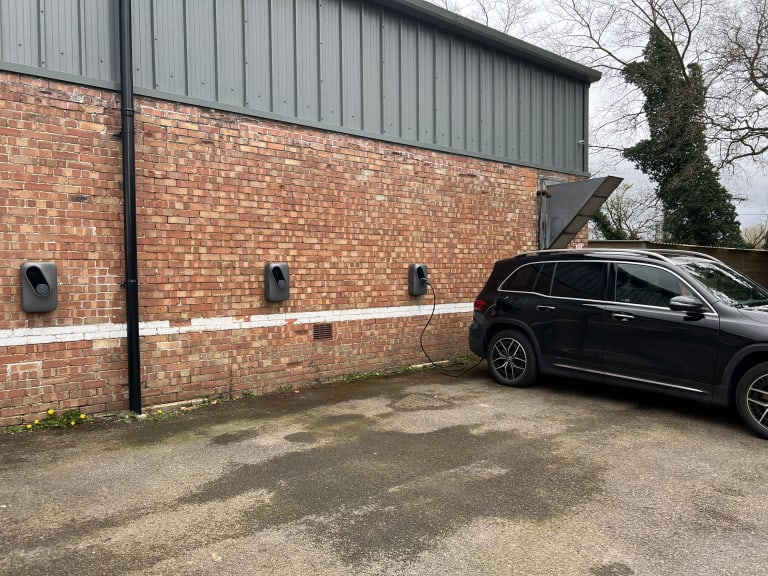
Tethered or socketed. Tethered chargers with a fixed Type 2 cable are convenient for drivers who do not want to carry their own. But cable damage is one of the most common maintenance issues on heavily used workplace chargers. A socketed unit with a locking cable gives you the same user experience with one advantage: if the cable is damaged, you simply swap it out rather than servicing the whole unit. This is a site by site decision we help you make.
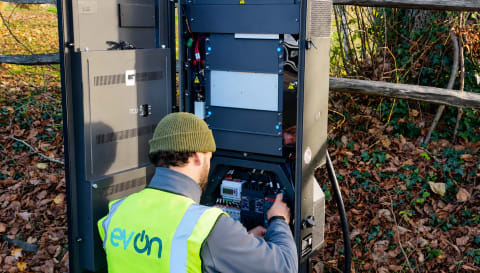
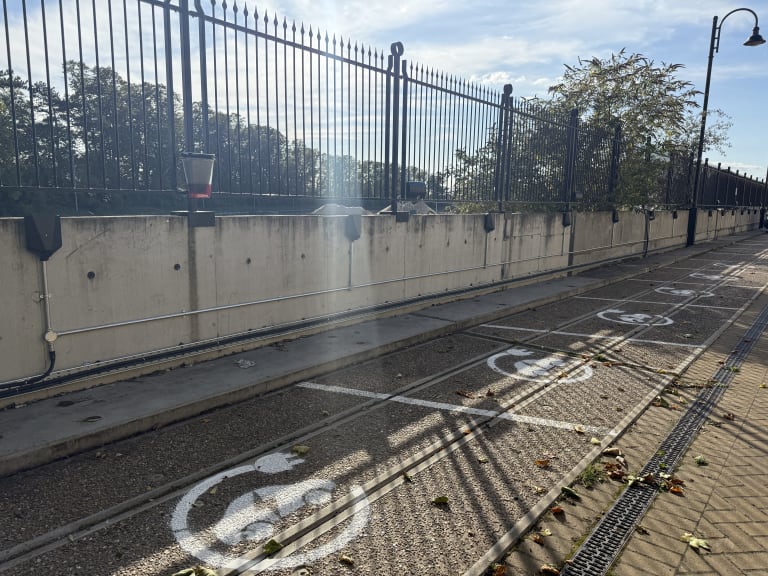
Durability. Workplace chargers live outdoors in car parks. Look for IP65 rated housings and vandal resistant designs. Pedestal mounted units suit open car parks. Wall mounted units work for buildings with adjacent parking.
We are not tied to one manufacturer. We specify whichever hardware delivers the best performance and value for your specific site.