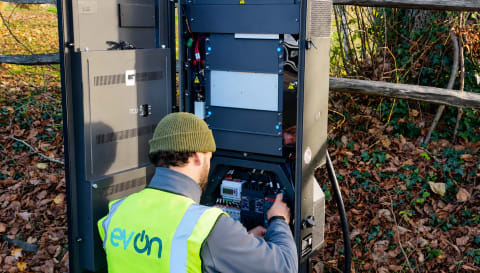
How the Hardware Protects Itself
A chargepoint socket is dead until the electronics authorise a session, there is no live pin for small fingers to find. Cables lock physically into the socket and the car while charging, so a trailing lead cannot be unplugged mid session by a curious passer by. Enclosures are sealed against weather and rated against impact, and every circuit carries the same protective devices as the rest of the school’s electrics, tested and certified at handover.
Access control adds the school specific layer. Sockets that only respond to registered staff cannot be misused during the day, whatever anyone plugs in or presses.
The Real Design Questions
Cable management is the honest one. A charging cable crossing a walking route is a trip hazard on any site, so charging bays sit where cables never cross pedestrian desire lines, with bay markings and kerbs doing the quiet work. Drop off flow matters too, bays go away from the morning circuit rather than in it.
For risk assessments, we provide the documentation pack schools ask for: equipment certifications, electrical test certificates, positioning drawings and the maintenance schedule. Most site managers fold it into their existing car park assessment in an afternoon.
On fire risk, the question behind the question: EV fires are rare, research puts electric vehicles at a fraction of the fire rate of petrol cars, and a parked car charging at 7kW is among the least stressed situations a battery ever sees.
What Pupils Actually Encounter
A locked box on a wall and some marked bays. Schools that lean in make more of it than that, the chargers become a live sustainability exhibit, usage data feeds geography and science lessons, and the eco council gets something real to report. Safety and curriculum both improve when the equipment is understood rather than mysterious.