What a School Specification Looks Like
| Requirement | Why it matters for schools |
|---|---|
| 7kW per socket | Fills any EV over a school day. Faster hardware costs more and changes the electrical design for no benefit at these dwell times |
| RFID and app access control | Stops unauthorised daytime use and enables staff, visitor and public policies on the same sockets |
| Vandal resistant enclosure | School car parks are public facing out of hours. High impact rated enclosures shrug off the treatment |
| Back office reporting | Usage, costs and revenue per socket, per site for trusts, readable by a business manager not an engineer |
| OZEV approved hardware | Grant funding requires it |
| Dual socket pedestals | Two sockets per post halves the groundworks per bay in open car parks |
Wall Units or Pedestals
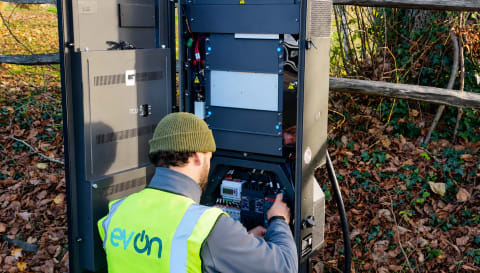
Buildings with parking against them take wall mounted units, cheaper and tidier. Open car parks take dual socket pedestals, one trench serves two bays per post. Most school sites end up with a mix, and the survey settles the layout along with cable routes.
Weather sealing matters more than badge. School chargers live outdoors year round with nobody watching them overnight, so we specify commercial enclosures with high ingress and impact ratings rather than domestic units dressed up.
The Software Half
The platform is where school life actually happens: staff registration, guest sessions from reception, public tariffs out of hours, and monthly reports for the finance office. Trusts get the same view across every school. We configure all of it at handover, and the hardware we fit is standards based, so the school is never locked to one supplier’s ecosystem.