What PAS 1899 Covers
PAS 1899 was published in 2022 by the British Standards Institution, with backing from the UK Government and the Motability Foundation. It sets out design requirements so disabled drivers can use public chargers independently.
The main areas are bay layout, equipment positioning, cable management, and site access. Heavy cables, high mounted screens, narrow bays, and kerbed approaches are the most common barriers. The standard addresses all of these.
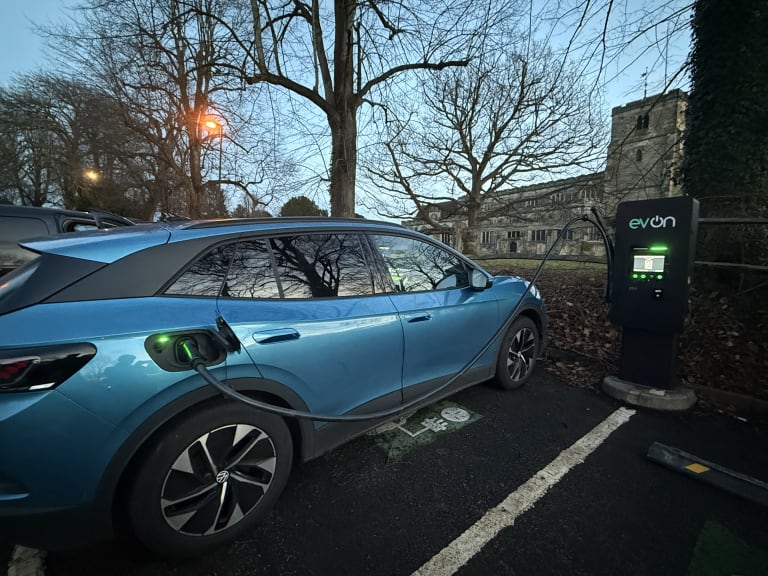
Charging connectors should sit between 750mm and 1200mm from the ground. Payment terminals range from 800mm for seated users to 1400mm for standing users. This allows wheelchair users and people with limited reach to plug in and pay without assistance.
Bay Design and Layout
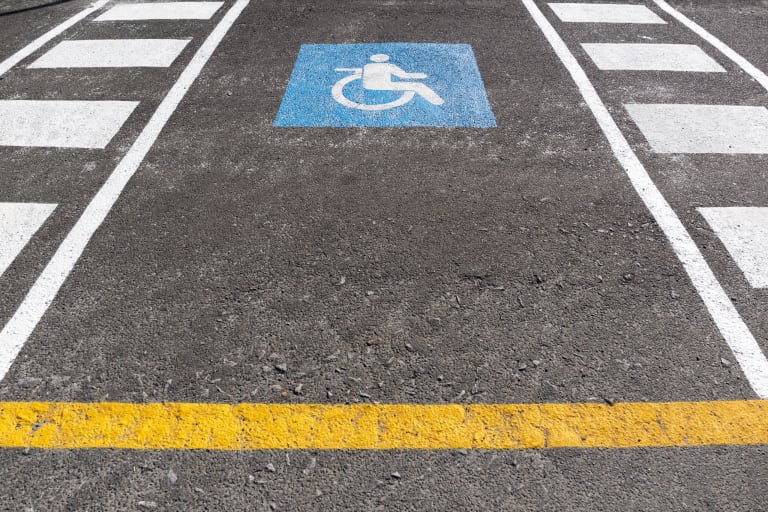
Accessible bays need to be at least 3.6 metres wide and 4.8 metres deep. This gives enough room for a wheelchair or mobility aid alongside the vehicle. Standard car park bays at 2.4 metres wide are not wide enough.
A minimum 1.2 metres of clear space is required around the charger. The approach route from the parking space to the charger must be at least 1.5 metres wide with a maximum gradient of 1:20. Dropped kerbs replace raised edges. Tactile paving guides visually impaired users. Cable management systems keep trailing leads off the ground.
Car parks with more than 20 spaces must allocate at least 6% of charging bays as accessible. This typically works out to one accessible bay per 15 to 17 charging spaces.
Why Build to PAS 1899 Now
An amendment to the Planning and Infrastructure Bill in November 2025 gave the government discretionary powers to make PAS 1899 legally binding for new public chargers. This means operators should not wait for formal mandates. Compliance is increasingly expected and will likely become a legal requirement.
Around 1.35 million disabled drivers are expected in the UK by 2035. Charging infrastructure that works for everyone is not just a regulatory box to tick. It is good practice and good business.
We design every public charging installation with PAS 1899 in mind. Accessible bays, correct heights, clear routes, and cable management are all part of the standard specification we deliver.