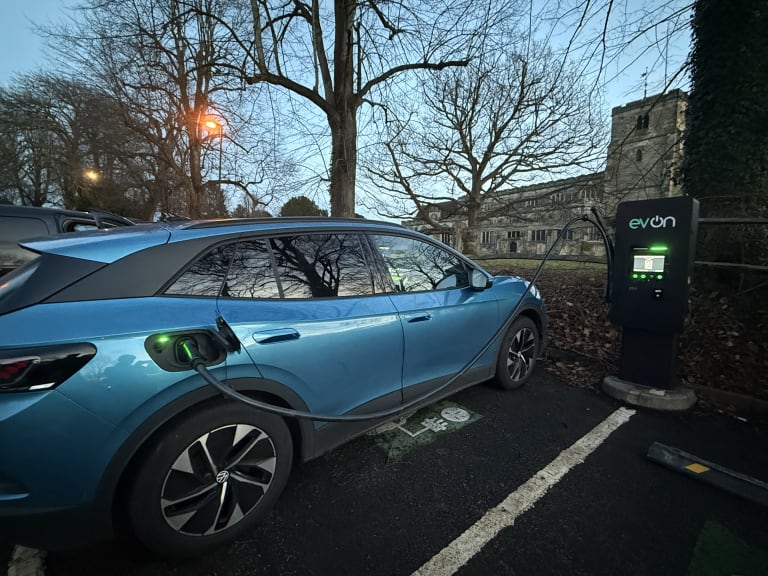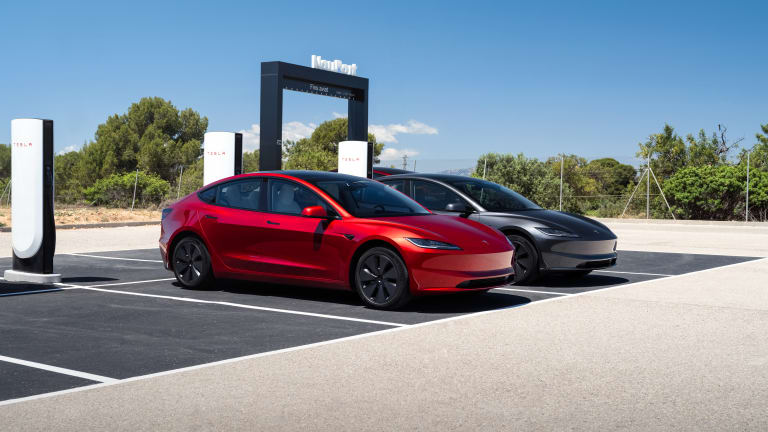
Power Requirements by Charger Type
The electrical demand scales with charger speed. A 7kW AC charger runs on a single phase supply drawing around 32 amps. That is similar to a large cooker circuit. A 22kW fast charger needs three phase power at 32 amps per phase.
Rapid chargers are a different scale entirely. A single 50kW DC unit needs roughly 60 to 70kVA of supply capacity once conversion losses are allowed for, planning at around 1.2 to 1.3 times the charger’s rating is the working rule. Ultra rapid chargers at 150kW or above need dedicated high capacity connections, often 170 to 200kVA each, and a hub running several of them can require a new transformer or substation with 1,000kVA or more behind it.
DNO Applications and Grid Connection
Before installation, your site needs approval from the local Distribution Network Operator. This is the company that manages the electricity grid in your area.
The process starts with a load assessment. We submit your expected power demand to the DNO. They check whether the local grid can handle it. For rapid chargers, a formal G99 application is required. This includes fault level studies and protection settings.
Approval typically takes 4 to 12 weeks. If the local network lacks capacity, the DNO may require reinforcement work. This could mean upgrading cables, installing a new substation, or extending the local ring main. We manage this entire process as part of every project.
Load Management and Cable Routing
Multi charger sites need load management. This shares available power across all active chargers using the OCPP protocol. If three drivers plug in at once, the system balances demand so the building stays within its supply limit. No manual intervention required.
Cable routing depends on your site layout. Armoured cables run in buried ducts at 600mm depth, separated from other utilities. Surface car parks use direct burial routes. Multi storey or covered car parks may use surface mounted trunking instead. Cable sizes range from 6mm for a single 7kW unit up to 95mm for rapid chargers.
All electrical work complies with BS 7671 (the IET Wiring Regulations) and Section 722 for EV charging circuits. Every circuit gets dedicated overcurrent protection and RCD coverage.