What the Survey Actually Checks
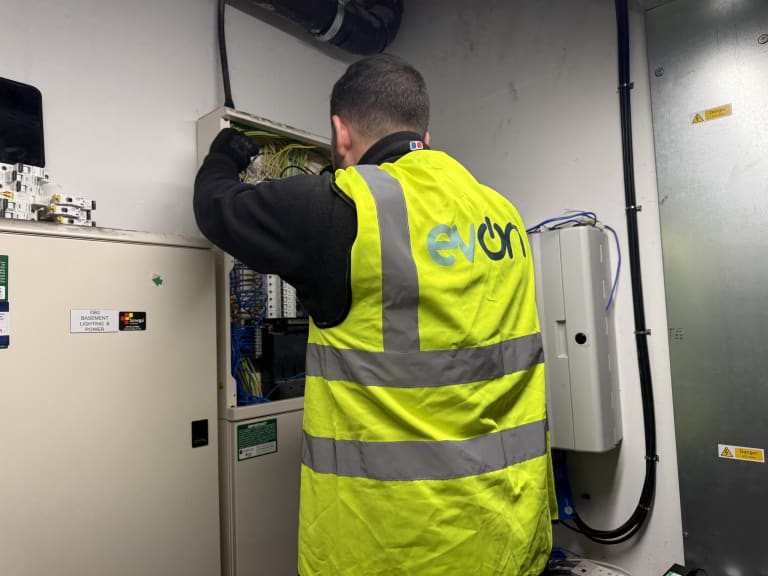
Three things. The rating of your main fuse, the space and condition of your fuse board, and your maximum demand, which is the realistic peak load when the big appliances run together.
A 32 amp charger on a 100 amp supply is comfortable for most households. On a 60 amp fuse the sums get tighter, and the classic pressure points are electric showers and heat pumps, both heavy loads that can run at the same time as an evening charge. That combination is what the demand calculation exists to catch.
The Fixes, Cheapest First
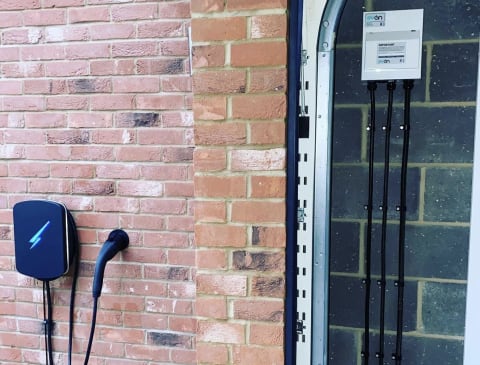
Load management solves most tight supplies. A small sensor clipped to your incoming supply watches whole house demand, and the charger throttles itself automatically when the shower or oven kicks in, then speeds back up after. You never notice, the car still fills overnight, and your main fuse never gets close to its limit. Most of the chargers we install include this with a CT clamp in the box.
If the supply genuinely needs more headroom, your network operator can upgrade the main fuse, often to 100 amps, frequently free or low cost. We handle that application when it is needed.
Older fuse boards sometimes need a spare way freed up, or a small separate board for the charger circuit. That is routine electrical work, priced at the survey, never a surprise on the day.
One Thing You No Longer Need
Older EV charger installs needed an earth rod driven into the ground. Every charger in our lineup has PEN fault protection built in, which does the same safety job electronically. Cleaner installation, less digging, one less cost.
The short version: your fuse box is very unlikely to be the thing that stops you. The survey confirms it either way, free.