What 7kW Delivers in Real Terms
| Time plugged in | Range added at 7kW |
|---|---|
| 1 hour | 25 to 30 miles |
| 3 hours | 75 to 90 miles |
| 6 hour overnight window | 150 to 200 miles |
| 8 to 10 hours | Full charge for most 60 to 77kWh batteries |
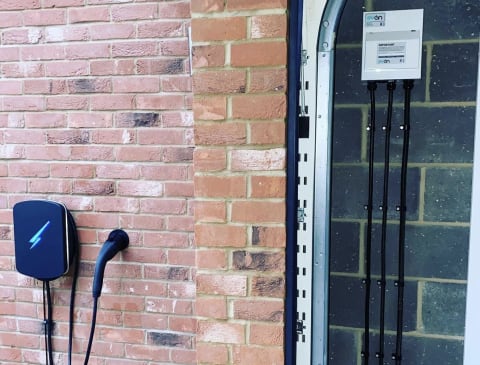
Every charger in our lineup runs at 7kW or 7.4kW on a standard single phase supply. The difference between those two figures is minutes on an overnight charge, nothing you would notice.
The habit that makes it all work: plug in when you get home, let the smart schedule charge in the cheap window, wake up full. Speed stops mattering once charging happens while you sleep.
Why Not Just Fit a 22kW Charger
Two reasons, and they stack. A 22kW charger needs a three phase electricity supply. Most UK homes have single phase, and upgrading typically costs several thousand pounds once the network operator gets involved.
Then your car has its own limit. Most EVs cap AC charging at 7kW or 11kW through their onboard charger, so a 22kW wallbox often charges no faster than the 7kW one, at several times the total cost. The charger cannot push electricity in faster than the car will accept it. Not a great return on a supply upgrade.
When 7kW Genuinely Is Not Enough
There are edge cases. Very high mileage drivers doing 150 plus miles daily, or households running two EVs off one charger with no overnight slack. Even then the answer is usually a second 7kW charger or better scheduling rather than three phase. Load balanced pairs, like two Easee Ones sharing a supply, solve the two car problem without any supply upgrade.
Rapid DC charging stays the public network’s job. For the home, 7kW on a smart tariff is the sweet spot of cost, speed and compatibility.