What Happens on the Day
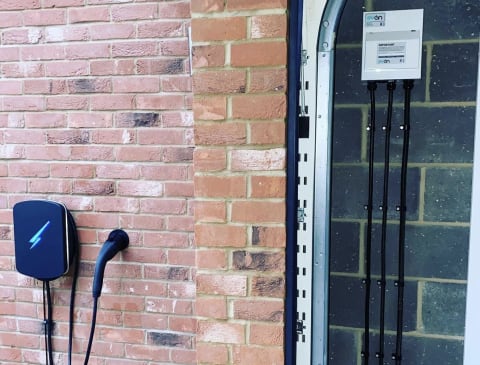
A standard install runs like this. The engineer routes a dedicated cable from your fuse board to the charging position, mounts the charger, fits the protective devices, then tests and certifies the circuit. Power is usually off for under an hour of that.
Before leaving we commission the charger, connect it to its app, link your tariff and run a live charge on your car. You should finish install day with a schedule already running, not a box on the wall and a manual.
The Timeline From Order to Install
Survey first, either remote with photos of your fuse board and parking, or in person for anything unusual. The survey sets the fixed price and catches complications early.
We also notify your DNO, the company that runs the local electricity network. For most 7kW installs this is a notification rather than a permission request. It only becomes a formal application if your property’s demand calculation or a looped supply requires network work, and that is the main thing that stretches timelines. A looped supply separation can add weeks, so it is exactly what the survey is designed to catch before you book a date.
What Turns a Morning Into a Full Day
Three things, mainly. A long cable run across the property, fuse board upgrades or a separate small board for the charger circuit, and groundworks where the cable has to cross a driveway or reach a detached garage. None of these are problems. They just need quoting honestly and scheduling properly, which is why we survey before we price.