Why It Works but Should Not Be the Plan
The granny charger exists for exactly this, an emergency top up anywhere with a socket. Visiting family, a holiday cottage, the first week with a new car before the wallbox goes in. All fine.
The problem is sustained load. EV charging pulls close to the maximum a domestic socket is rated for, continuously, for a day or more. Modern, well wired sockets handle it. Older sockets and worn wiring can overheat, and manufacturer guidance is blunt about the fire risk. Extension leads make it worse, especially coiled ones, which is why safety guidance rules them out for EV charging altogether.
If you find yourself granny charging more than once in a while, that is the signal to fit a proper charger.
The Cost of Slow
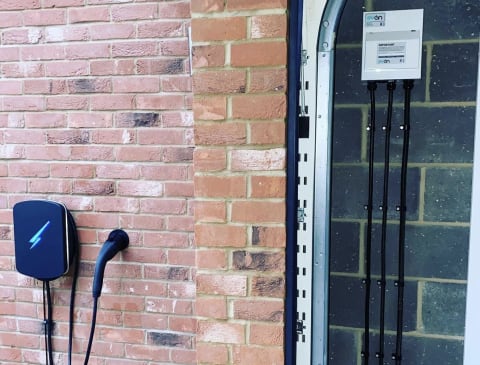
Speed is the obvious gap, 8 miles of range per hour against 25 to 30 from a 7kW wallbox. The hidden gap is the tariff. A granny charger has no smart control, so it cannot join tariffs like Intelligent Octopus Go that schedule charging into the ~8p window automatically. You can time it manually inside a fixed off peak window, but the deepest savings need a smart charger doing the work.
Over a 10,000 mile year, that tariff difference alone is worth around £500. The wallbox pays for itself, then keeps paying.
When the Granny Charger Earns Its Keep
Keep one in the boot. For destinations without charging, it turns any socket into a slow lifeline, and 12 hours plugged in overnight still adds around 100 miles. As the only charging plan for a home with off street parking, it is the wrong tool.