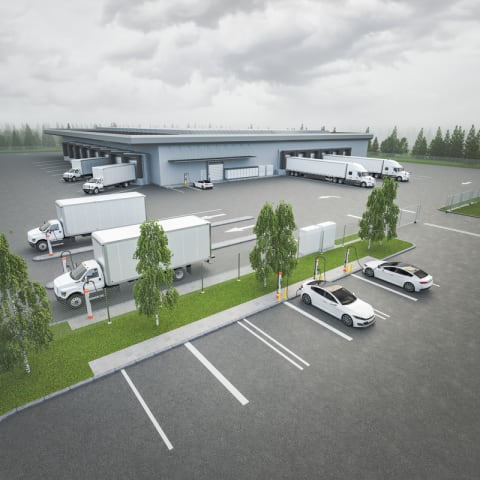
AC vs DC at the Depot
AC charging at 7 to 22kW is the workhorse of depot charging. A small electric van with a 40kWh battery charges fully in 2 to 3 hours on a 22kW AC charger. Larger vans with 75 to 100kWh batteries take 4 to 5 hours. Vehicles parked for 8 or more hours overnight will always reach full charge on AC.
DC rapid chargers at 50kW and above deliver 80% charge in under an hour for most vans. They cost significantly more to install and draw much more power from the grid. Most depots need DC for only 10 to 20% of their fleet. The vehicles running double shifts or requiring mid day turnaround.
How Smart Load Management Works
Load management is software that shares available electrical power across all chargers on site. If your supply provides 100kW and you have 10 chargers, the system distributes power based on priority and schedule. High priority vehicles get full power first. Others charge at a reduced rate and reach full capacity during the overnight window.
This means you can install more chargers than your raw electrical supply would normally allow. No expensive DNO upgrade required in many cases. The system adapts in real time as vehicles plug in and unplug throughout the day.
What Infrastructure Is Needed
A depot charging installation includes electrical distribution upgrades, cabling from the distribution board to each bay, the chargers themselves and backend software for scheduling and monitoring. Larger sites may need a new or upgraded supply connection from the DNO, which can add 6 to 12 months to the project timeline.
We assess your site during the initial survey. Vehicle schedules, power availability, bay layouts and growth plans all feed into the design. The Workplace Charging Scheme funds £500 per socket, up to 40 sockets across your sites, and we handle the application as part of the project.