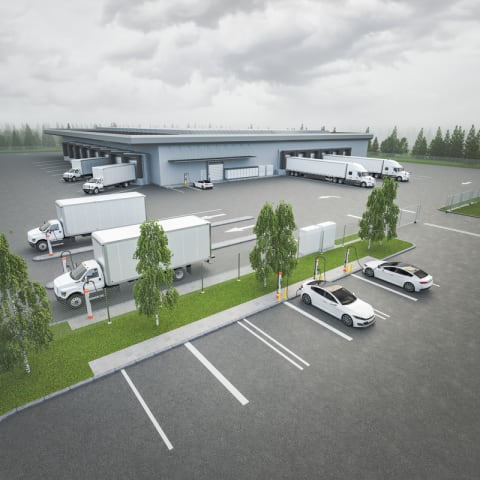
How AC Charging Works at the Depot
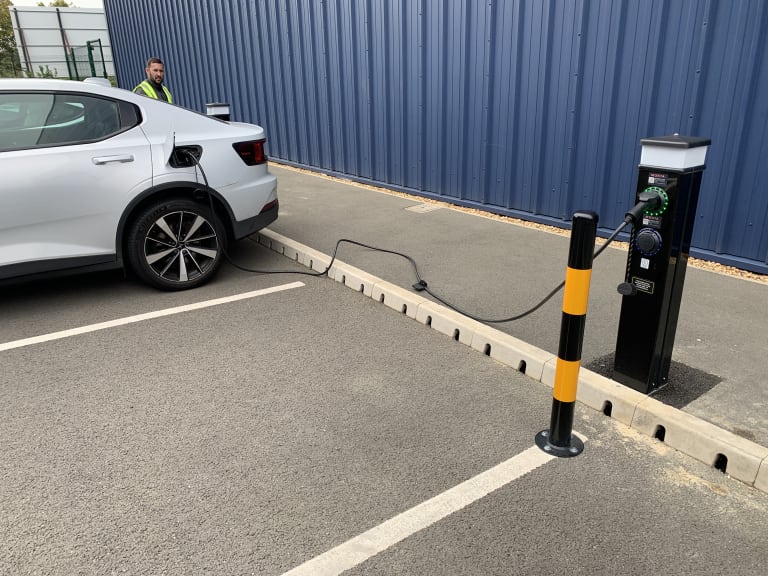
AC chargers run at 7kW or 22kW. A 22kW charger fully charges a small electric van with a 40kWh battery in 2 to 3 hours. Larger vans with 75 to 100kWh batteries take 4 to 5 hours. Vehicles parked overnight will always reach full charge on AC well before the morning shift.
AC is the workhorse of depot charging. Lower hardware costs, lower installation costs and lower energy demand per charger. For 80 to 90% of fleet vehicles, AC is all you need.
When Your Fleet Needs DC Rapid Charging
DC rapid chargers bypass the vehicle on board converter and push power directly to the battery. A 50kW DC charger delivers 80% charge in approximately 30 minutes for most vans.
You need DC for vehicles that cannot sit still long enough for AC. Double shift operations, mid day turnarounds and high mileage routes. Vehicle downtime can account for 20 to 30% of lost operational efficiency in commercial EV fleets. Faster charging recovers that cost directly.
Getting the Right Mix
We assess your duty cycles, vehicle schedules and parking patterns to recommend the right balance. Most depots install AC across all bays and add DC for the vehicles that genuinely need it. Overspecifying DC where AC would suffice increases your infrastructure costs significantly.
The Workplace Charging Scheme covers £500 per socket toward installation costs for AC chargers used by staff and fleet vehicles. Up to 40 sockets across all your sites. Getting the mix right means optimising both your grant funding and your operational costs.