Charging Times by Van Model
Charging times vary by battery size and the power level of the charger. Real world range is typically 60 to 70% of the manufacturer WLTP figure due to payload, weather and driving style.
| Van Model | Battery | Real World Range | 7kW AC (full) | 22kW AC (full) | 50kW DC (10-80%) |
|---|---|---|---|---|---|
| Nissan e-NV200 | 40kWh | 100-150 miles | 8-10 hrs | 4-5 hrs | 30-40 min |
| Vauxhall Vivaro-e | 75kWh | 150-180 miles | 10-12 hrs | 4-6 hrs | 35-45 min |
| Ford E-Transit | 68kWh | 150-180 miles | 10-13 hrs | 4-6 hrs | 30-40 min |
| Renault Kangoo E-Tech | 45kWh | 120-160 miles | 7-9 hrs | 3-4 hrs | 30-40 min |
| Mercedes eSprinter | 47-113kWh | 120-200 miles | 8-16 hrs | 3-7 hrs | 30-50 min |
The 2026 Ford E-Transit supports DC charging up to 125kW, cutting 10 to 80% charge times to around 30 minutes. Most other vans currently cap at 50 to 100kW DC.
What Affects Charging Speed
Temperature is the biggest variable. Cold UK winters can slow charging by 25 to 50% as the battery management system preconditions the cells. Preheating via the vehicle app before plugging in helps.
Battery state of charge also matters. Charging slows significantly above 80%. Most fleet operators target 10 to 80% on DC rapid chargers to avoid the slowdown at the top of the range.
Heavier payloads do not affect charging speed directly, but they reduce range by 20 to 30%. That means more frequent charging for heavily loaded vans.
Depot Charging vs Rapid Top Ups
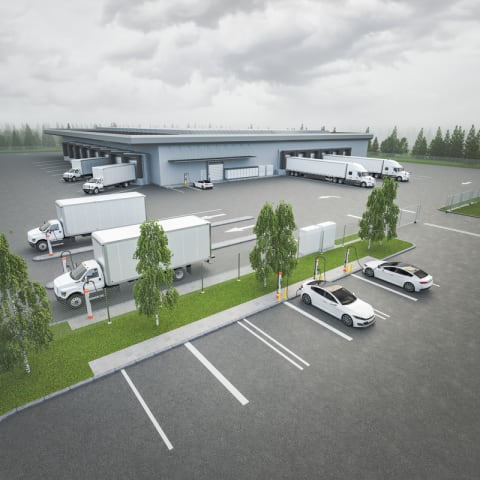
For fleet operations, overnight AC charging handles 80 to 90% of your needs. Vehicles return to the depot, plug in and reach full charge before the morning shift. A 7kW charger is enough for any van parked 8 or more hours.
DC rapid charging serves a different purpose. Mid shift top ups for high mileage routes. Emergency top ups when vehicles run low. Turnaround charging for double shift operations. Most depots need DC for only 10 to 20% of their fleet.