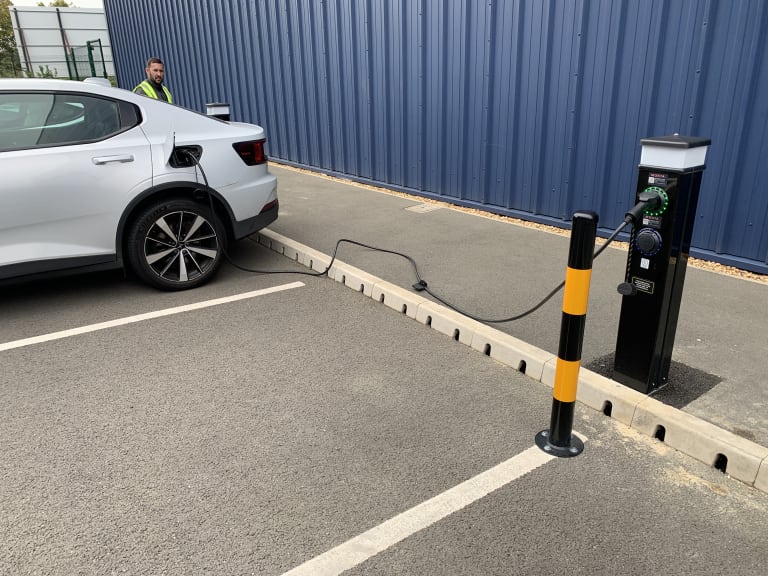
The Workplace Charging Scheme
The Workplace Charging Scheme is the active OZEV grant for fleet EV charging in 2026. It covers up to 75% of the cost to buy and install each socket, capped at £500 per socket. The rate was uplifted from £350 to £500 on 1 April 2026.
You can claim for up to 40 sockets across all your fleet sites. That is a maximum total of £20,000 across your portfolio. The grant works for depot charging, staff parking, and any operational location where company vehicles or staff EVs charge.
The scheme is open to UK businesses, charities, and public sector organisations. You apply online, receive a voucher within 5 working days, and share it with your OZEV approved installer. The installer deducts the grant from your invoice. Vouchers are valid for 180 days.
The Workplace Charging Scheme is open to new applications until 31 March 2027.
What Happened to the EV Infrastructure Grant
The EV Infrastructure Grant for Staff and Fleets covered up to £15,000 per site, plus £350 per socket. It paid for the cabling, groundworks, and other infrastructure that the Workplace Charging Scheme does not cover.
This grant closed to new applications on 31 March 2026. There is no direct replacement for the per-site infrastructure cap.
If you submitted an application before 31 March, your installer has until 26 May 2026 to complete the claim, with a final resubmission deadline of 6 July 2026.
How the Workplace Charging Scheme Works for Fleets
A typical depot installing 10 active chargers receives £5,000 in grant funding (10 sockets × £500). For multi-site fleet operators, the 40 socket cap allows phased installations across the portfolio. A fleet operator with 8 vans at each of 5 depots can claim the full 40 sockets at £500, totalling £20,000.
We handle the entire application process. The grant value is deducted directly from your quote so you pay the lower price from day one.
For grant funding above the Workplace Charging Scheme cap, fleets typically combine the grant with operational savings from depot charging versus public networks. The total cost reduction is usually larger than the grant value alone.