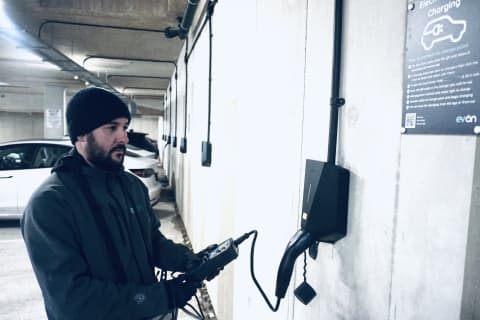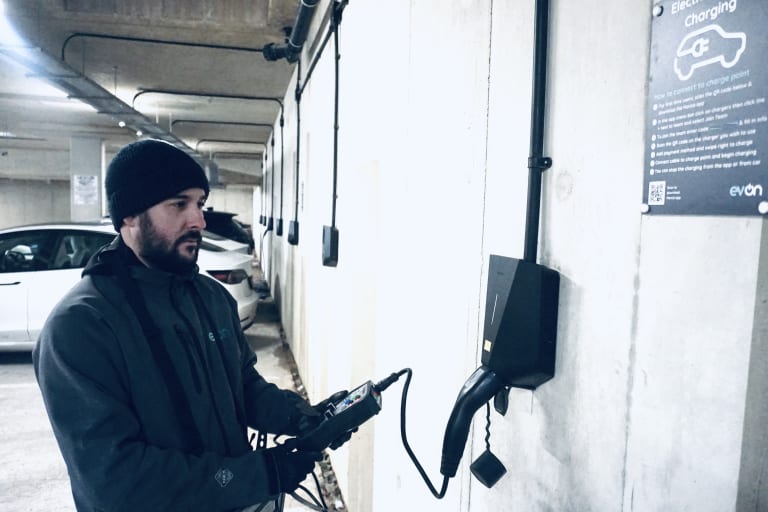
First, work out whether it has power
Before anything else, find out whether the charger is dead or merely refusing to charge. They are different problems.
No lights at all, no display, nothing when you plug in. The unit is not getting power. Go and look at your consumer unit. An EV charger sits on its own dedicated circuit with its own protective device, and that device tripping is the single most common cause of a completely dead charger.
Lights on but no session. The charger has power and is choosing not to start. That is a different set of causes, below.
The four usual suspects
1. A tripped protective device. Reset it once. If it holds, note when it happened and watch it. If it trips again, stop. A device that trips repeatedly is doing its job, and something on that circuit is drawing current it should not be. Repeated resetting is the wrong response.
2. Connectivity. Smart chargers check in with a back office before authorising a session. If the unit has lost wifi, moved off a changed router password, or the manufacturer is having an outage, the charger can sit there fully powered and refuse to start. Try the manufacturer app, and try a manual or off peak override if the unit has one.
3. The connector and cable. Look at the pins inside the connector for burning, discolouration or debris. Feel whether the latch still clicks and grips. A worn latch produces the most annoying fault of all, which is charging that starts and then stops intermittently.
4. Firmware. An update can land overnight and change behaviour without telling anybody, breaking a schedule or a tariff integration. If the charger stopped working on a day you changed nothing, this is worth ruling out before assuming hardware.
Genuine component failure is further down the list than most people expect. It happens, but a charger that has stopped is far more likely to be one of the four above.
Rule out the car and the schedule
Two false alarms worth checking before you call anybody.
The schedule. Most smart chargers and most EVs both have their own charging schedules, and both are usually set to off peak hours. A charger doing nothing at 7pm may be behaving exactly as configured. Check the schedule in the charger app and in the car.
The car. Try charging somewhere else, on a public charger or a friend’s unit. If the car will not take a charge there either, the fault is in the vehicle rather than in your charger.
What you can safely do yourself
Look, and reset a breaker once. Check the app. Check the schedules. Try a different cable if you have an untethered unit. Clean debris out of a connector with the power off, gently, and with nothing wet.
What not to do: open the unit, work on the circuit, or keep resetting a device that keeps tripping. That circuit runs at a rating where mistakes are serious, and the work falls under Part P.
When it is not your charger at all
If the whole circuit is dead and other things in the house are affected, or if your supply has been intermittent, the fault may be upstream of anything you own. Supply faults belong to your distribution network operator, and they attend them without charge.