Start with what is actually broken
The most useful thing to know before spending money is that a charger which will not charge is often not the thing that is faulty.
The unit sits on the end of a dedicated circuit, behind a protective device, fed from a consumer unit or a distribution board. A fault anywhere along that chain presents exactly the same way to you, as a dead charger.
That is good news, because circuit side faults are usually straightforward and inexpensive to put right. A tripped or failed breaker, a loose termination, water in an isolator, or a damaged supply cable are all repairs rather than replacements.
What is repairable on the unit itself
Protective devices. RCDs and RCBOs, either on the circuit or inside the enclosure. These are the parts we replace most often, and they are inexpensive.
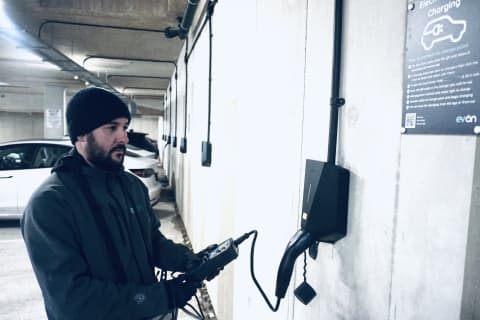
Connectors and cables. On a tethered charger the cable takes the abuse. Worn latches, damaged pins and cut cable are all replaceable, and on many brands the whole lead is a serviceable item.
Contactors. The relay that switches the supply. Replaceable on most units, though we very seldom need to. Outright contactor failure is rare on AC chargers and the few we have seen have been on DC equipment.
Seals and enclosures. Water ingress is a repair if it is caught before it reaches the electronics, and a replacement if it is not.
Firmware and connectivity. Not a physical repair at all, and a surprising share of “broken” chargers are a unit that has lost its back office connection or stalled after an update.
What usually is not worth repairing
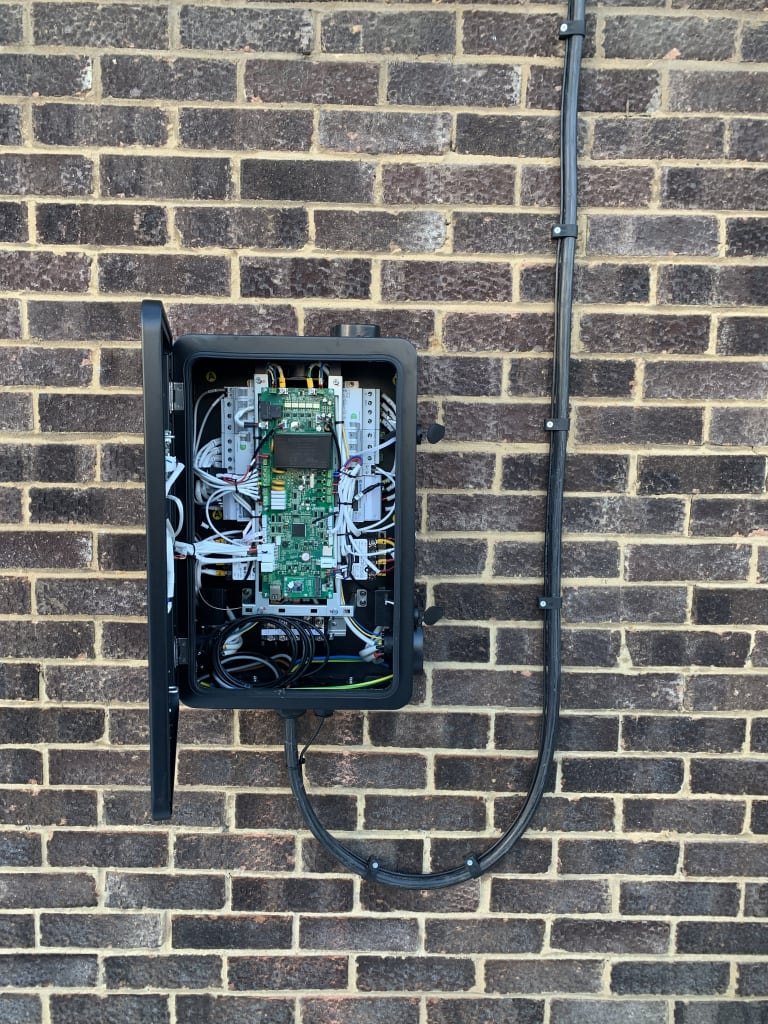
Control boards. On most domestic units the main board is not sold as a spare, and where it is, the cost sits close enough to a new charger that replacement wins.
Anything on a discontinued brand. If the manufacturer has gone, so have the parts. The unit can sometimes be kept alive from salvage, but nobody should be promising you a supported repair.
Fire or severe water damage. Not a repair.
What about doing it yourself
The visual checks are fine to do yourself. Look for obvious damage to the cable and connector, check whether the charger has power, and see whether a breaker has tripped in your consumer unit.
Opening the unit is not. An EV circuit is high current, it is protected in a specific way for a reason, and the enclosure seal is part of how the thing stays safe outdoors. Work on it falls under Part P of the Building Regulations, and getting it wrong on a circuit of that rating is not a small mistake.
Resetting a tripped breaker once is reasonable. A breaker that trips again is telling you something, and repeatedly resetting it is the wrong response.
Warranty first
Before paying anyone, check the age of the unit. Three years is the common warranty period on UK home chargers and some brands offer longer, but they vary, so yours is worth checking rather than assuming.
If it is in warranty, the manufacturer or the original installer should be your first call, not a third party repairer. Bringing somebody else in can invalidate what you already have.