1. Visual inspection
The part that sounds trivial and catches the most.
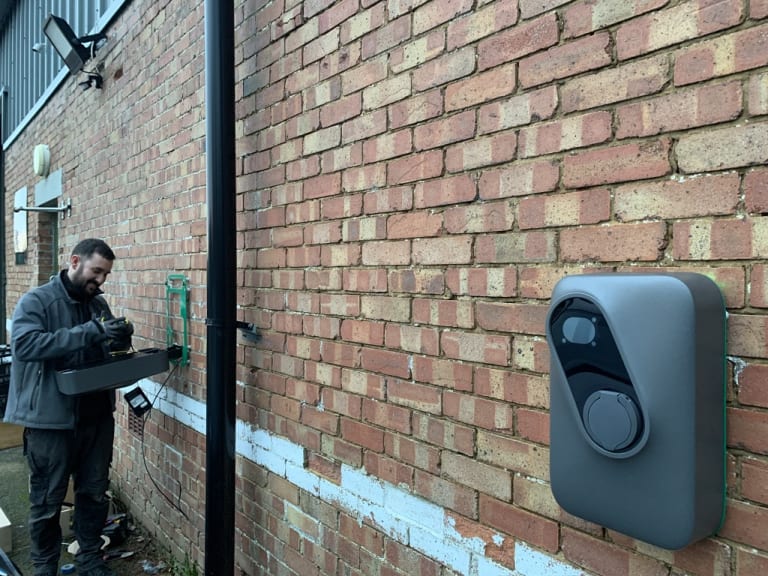
The enclosure is checked for damage, for signs of overheating or burning, and for water ingress at the cable entries. Mountings are checked for security. Vents are checked for obstruction. Cables and connectors are checked for fraying, cuts, and a latch that no longer grips.
Around the unit, the check covers drainage, lighting for night use, and whether safety labelling and circuit identification are present and still legible.
A structured checklist matters here. Ours runs to fifteen points across six categories, because “looked fine” is not a finding anybody can act on later.
2. Electrical testing
This is the part that separates an inspection from a visit, and it needs calibrated instruments.
Earth fault loop impedance is measured at each charge point and compared against the maximum permitted for the protective device, to verify automatic disconnection under BS 7671 Regulation 411.4.2.
Insulation resistance is measured at 500V DC, with a minimum acceptable value of 1 megohm per BS 7671 Table 61. Healthy circuits usually read far above that, and a falling figure is an early warning.
RCD testing records the actual trip time in milliseconds against the device rating, rather than a pass or fail tick. This matters more than it sounds: nuisance tripping is the single most common reason we are called to a dead charger, and a device drifting out of specification shows up here before it strands anybody.
PEN fault protection is assessed on TN-C-S supplies against Regulation 722.411.4. This is where pre rule installations most often show up.
Polarity and continuity are confirmed throughout.
3. Functional testing
Testing the circuit is not the same as testing the charger. Functional checks confirm the unit actually starts and stops a session, that status indicators work, that the connector locks and releases, and that the unit reports correctly to the back office.
On a site with load management, the check extends to whether the units are still balancing as designed, which is a common casualty of a firmware update nobody noticed.
4. The report
If none of the above is written down, it did not happen as far as anybody else is concerned.
A useful report names the engineer who attended and the date. It carries a reference so it can be cited. It lists every unit by serial number, so the record is about specific assets rather than a site in general. It records the measured values, not just the outcome. It names the test instrument and its calibration due date. It grades anything found by severity, so you can tell an urgent safety issue from something to pick up at the next visit. And it states when the next inspection falls due.
That is the document you forward to an insurer, a board, or a client. It is also the document that proves a duty was discharged, which is a separate thing from discharging it.
What is not in a visit
Replacement parts and hardware are normally charged separately, at cost plus labour. Civil works, damage from vandalism or theft, and faults on your incoming supply all sit outside a maintenance visit.
Those exclusions are normal. What is not normal, and worth checking in any quote, is a contract that also bills the engineer’s labour separately every time a charger fails.