Which Vehicles to Electrify First
Company cars are the easiest starting point. Tax incentives make them attractive to drivers. The Benefit in Kind rate sits at 3% for 2025/26 compared to 37% for equivalent diesel models. Many large UK fleets have already moved their car fleet to majority electric through salary sacrifice and company car schemes.
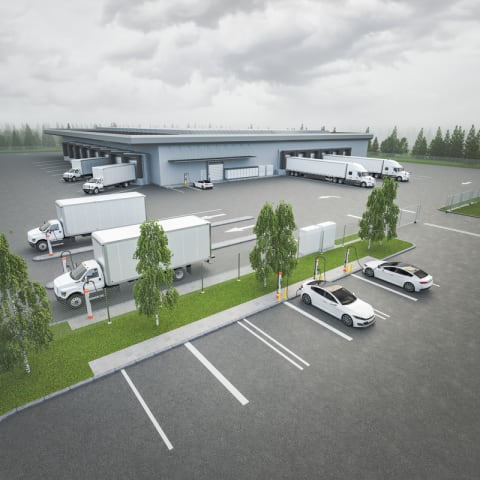
Vans with fixed daily routes under 150 miles and overnight depot parking come next. These vehicles have predictable energy needs and long dwell times for charging. A 7kW AC charger delivers a full overnight charge for most vans with batteries up to 75kWh.
Heavy goods vehicles are further behind. Battery electric HGV options are still limited, though the government invested £200 million in the Zero Emission HGV and Infrastructure Demonstration programme, supporting around 370 zero emission trucks and roughly 60 infrastructure sites. Plan for HGV electrification by securing electrical capacity at your depot now. The infrastructure you install for vans can be extended for larger vehicles later.
Scaling Your Infrastructure
Future proof your electrical infrastructure from the start. Install cabling and distribution capacity for your full electric fleet even if you only need chargers for 20% of vehicles today. The cost of trenching and cabling is highest during the first installation. Adding chargers to existing cabling later is significantly cheaper.
Grant funding now comes through the Workplace Charging Scheme, £500 per socket up to 40 sockets across your sites, open until 31 March 2027. The old EV Infrastructure Grant that funded cabling and groundworks closed in March 2026, which makes sizing the civils for your full fleet during the first installation even more valuable: the expensive part only gets dug once.
Smart load management means more chargers can share the same supply. Start with 10 chargers on your existing capacity. Add 10 more next year without touching the electrical supply. The system redistributes power automatically.
Managing the Transition Period
Run ICE and EV vehicles in parallel during the transition. Use fleet management software that handles both fuel and electricity reporting. Consolidated dashboards show costs per mile across your entire fleet regardless of fuel type.
Set replacement milestones aligned with your vehicle lease cycles. When a diesel van reaches end of lease, replace it with electric and add a charger. This gradual approach spreads capital costs and avoids operational disruption.