The real disadvantages
Here are the honest downsides, stated plainly.
Upfront cost. A home battery typically costs a few thousand pounds fitted, and a larger system more. That money could go on insulation, more solar, or paying down a mortgage. Those often give a more predictable return.
Efficiency losses. No battery gives back everything you put in. A lithium system returns around 85 to 90 percent. The rest is lost as heat and in the conversion. Store 10 units, get roughly 8.5 to 9 back.
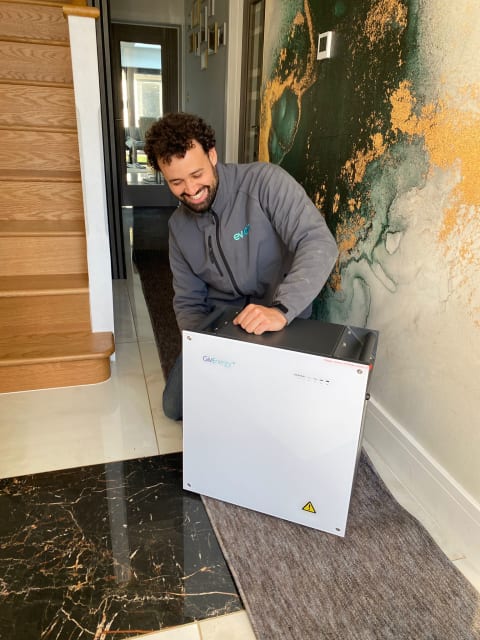
Space. A battery is bulky. It needs a solid wall or floor in a garage, utility room or outside, with clearance around it. Small flats and tight terraces can struggle to place one well.
Degradation. Capacity fades with use. Most units hold around 70 to 80 percent after ten years, which is why warranties are written that way. Savings shrink slowly as the battery ages.
Why payback is uncertain
You will see paybacks quoted anywhere from six years to never. The spread is real, and it comes down to how you use the battery.
Payback depends on the gap between cheap and peak electricity, how often you cycle the battery, and whether tariffs stay favourable. Change any of those and the maths moves. Sources put a typical home payback somewhere around 8 to 13 years, and honest ones admit the range is wide.
A battery makes most sense when it works hard every day, filling from solar or cheap night rates and displacing expensive daytime power. Sit it idle and it never pays for itself. The economics reward use, not ownership.
Who battery storage is not for
A battery is not right for everyone. Skip it, for now, if any of these describe you.
Your electricity use is very low. If your bills are small, the savings are smaller, and the battery may never pay back.
You have no off peak tariff and no plan to get a smart meter. Without a cheap window to fill from, a battery on a single flat rate has almost no route to savings.
You have no solar and no interest in a night rate. The two ways to fill a battery cheaply are solar and off peak power. With neither, the case falls away.
You are moving soon. If you plan to leave within a few years, you likely will not recover the cost first.
If none of those apply, and you use a decent amount of power or have solar on the roof, a battery can pay and add resilience. The honest way to know is to look at your actual usage. That is the first thing we do.
If your situation looks like a fit, see whether the sums add up on our is a home battery worth it page, or read the full service detail on our battery storage installation page.