Worth knowing how the system works too. See how battery storage works for the plain version.
The chemistry does a lot of the work
Most home and commercial batteries now use lithium iron phosphate, often written LFP or LiFePO4. This is not the same chemistry as the older packs you may have read about in phone or car fires.
LFP is more thermally stable. The cells are far less likely to enter thermal runaway, the self feeding overheating that causes serious battery fires. Even under fault, they release less heat and gas and react more slowly, which gives the safety systems time to act.
Independent fire tests bear this out. It is why insurers and fire services increasingly prefer LFP for buildings. It is more forgiving when something goes wrong.
Standards and built in protection
A battery is not a box you hope for the best with. It sits inside a dense framework of UK and international safety rules.
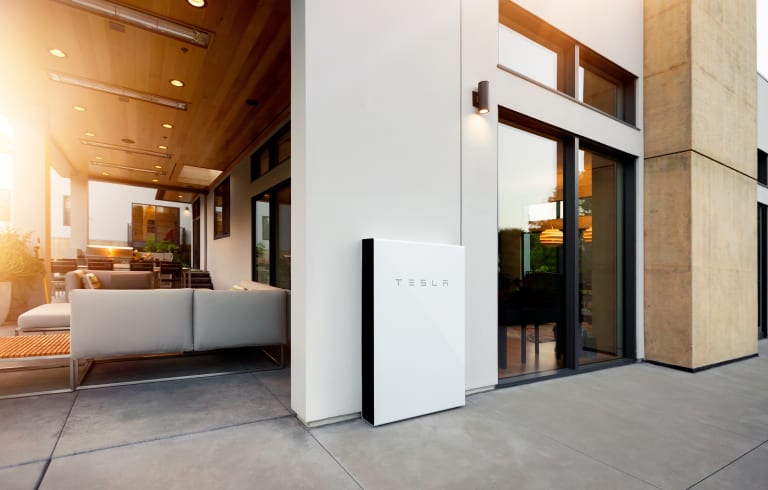
The cells and system are tested to standards such as IEC 62619 and, on larger systems, UL 9540 fire testing. In the UK, wiring rules under BS 7671 now include a dedicated chapter for battery installations, covering where a unit can sit, clearances from windows and flammable materials, and fault detection. Lofts are no longer allowed. Garages, utility rooms and outdoor mounts are the norm.
Every quality battery also carries a management system, the BMS. It watches cell voltage, current and temperature constantly. If anything moves out of safe range, it stops charging, cuts output, or isolates the pack. Most serious incidents involve damaged or badly installed units, not professionally fitted ones. That is why the installer matters as much as the battery.
What the numbers actually say
Honesty helps more than reassurance here, so here are the figures.
The Faraday Institution describes lithium ion battery fires as very rare, estimating that only around one in 40 million cells fails in a way that leads to fire. Across the whole of the UK, professionally installed grid scale storage has recorded a tiny number of incidents even as installed capacity grew sevenfold between 2020 and 2025. Globally, failure rates have fallen sharply as standards improved.
Home systems have far fewer cells than those large sites and are fitted under the same product and wiring rules. Known UK battery fires have mostly involved EVs or loose consumer devices, not certified home batteries.
How we keep yours safe
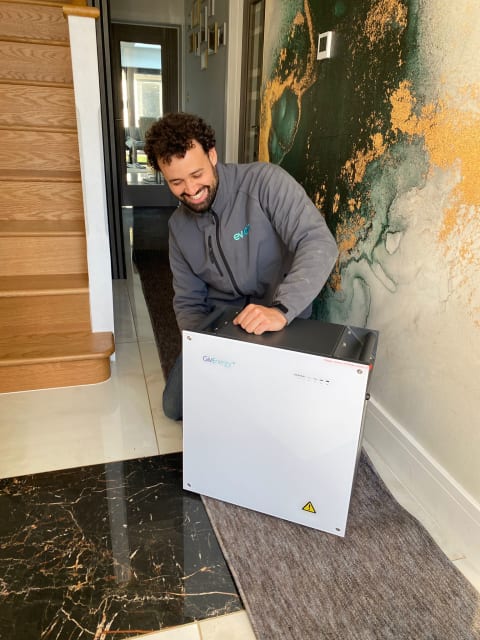
We fit the safer chemistry and we fit it properly. Our own engineers install to BS 7671 wiring standards under MCS certification. No subcontracted crews, no shortcuts.
We site the battery in the right place, keep the clearances the rules require, and set up the management system and monitoring so we usually spot a fault before you do. Solar, battery and EV charging sit on one platform, watched by the team that fitted them. Installed to standard, monitored for life. That is the difference between buying a box and buying a system. See how our battery storage installation is designed, fitted and monitored.