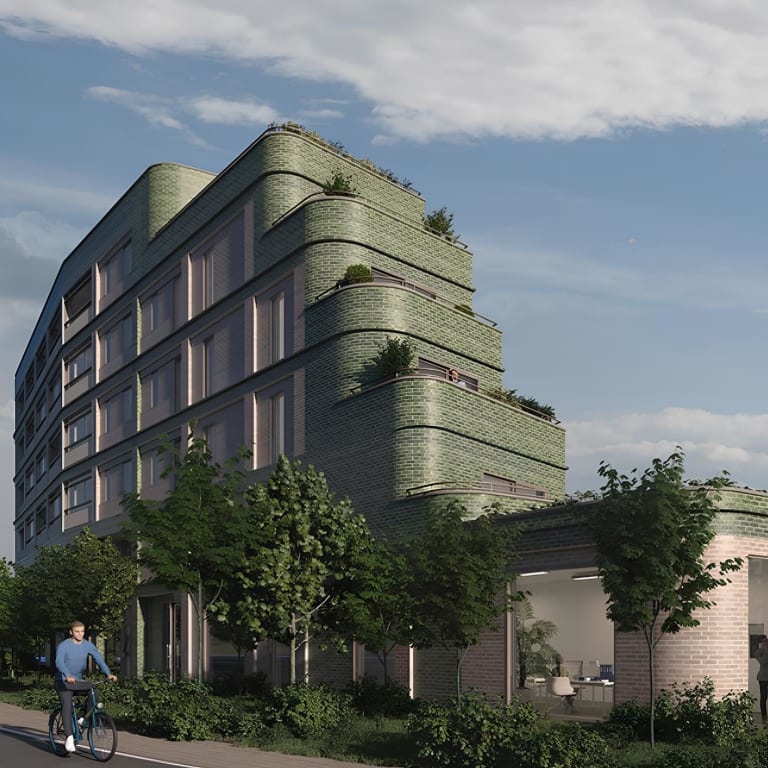
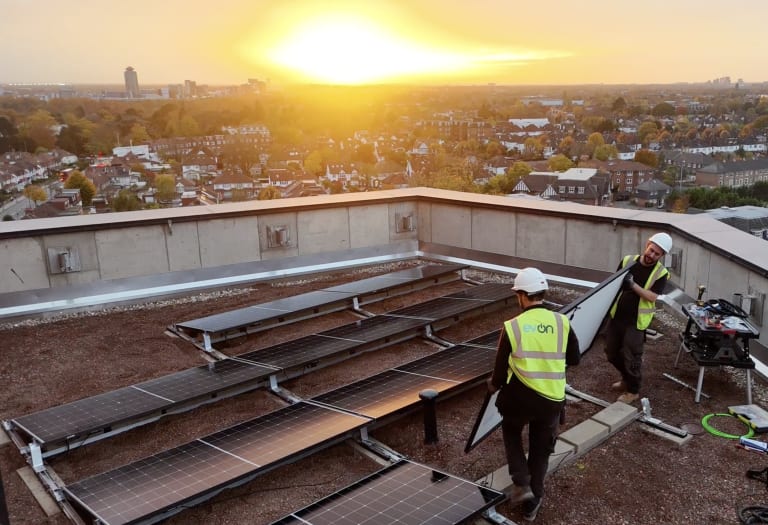
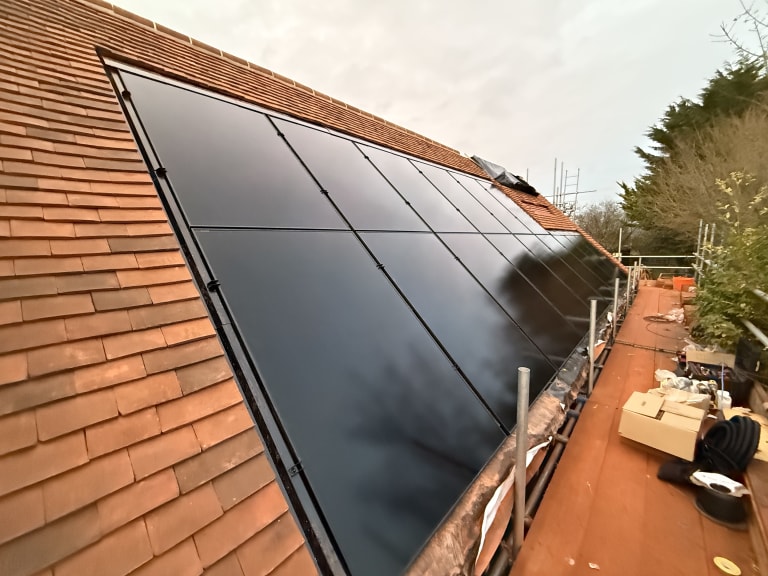
A 7.83 kWp SolarEdge system serving the landlord's communal supply at The Mirador, a new build apartment block in Acton, London. 18 Jinko Tiger Neo panels, East/West split on a ballasted flat roof, panel-level optimisation, three-phase grid connection. Projected 5,889 kWh per year.
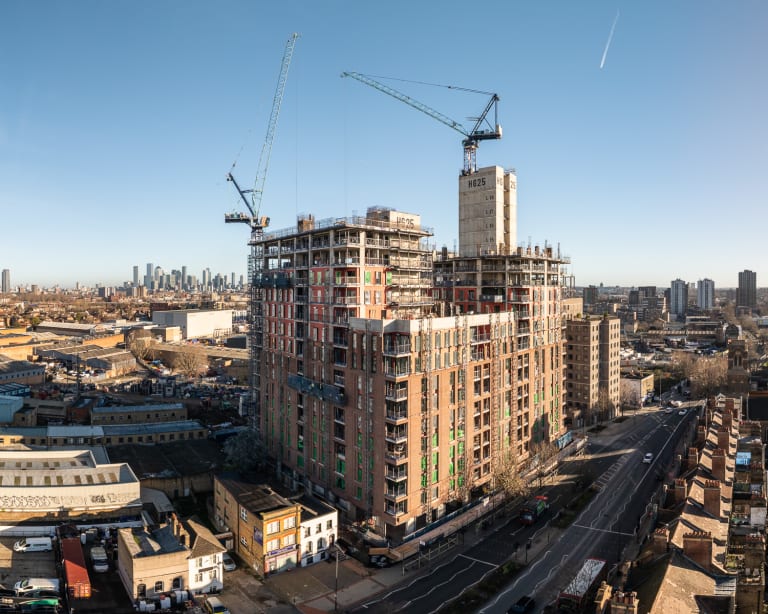
The Mirador is a new build apartment block on Rosebank Way in Acton, London, W3 6TN. Here is what we delivered.
| Property Type | New Build Residential Apartment Block (23 apartments, 5 houses, 2 commercial units) |
| Location | Rosebank Way, Acton, London, W3 6TN |
| Completion Date | October 2024 |
| Project Duration | 4 days on site |
| System Size | 7.83 kWp |
| Panels | 18 × Jinko Solar JKM435N-54HL4R-B (435W Tiger Neo N-Type All Black Mono) |
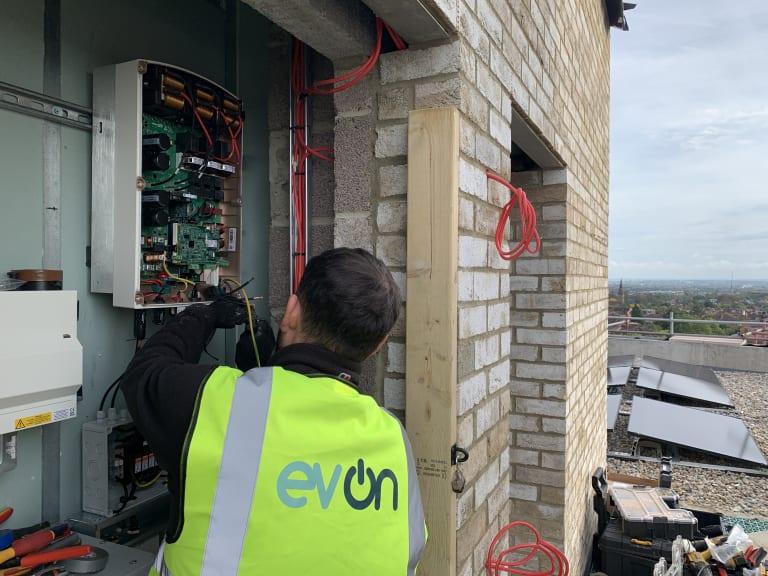
| Inverter | 1 × SolarEdge SE8K Home Wave (three-phase, 8 kW) |
| Power Optimisers | 18 × SolarEdge S440 (one per panel) |
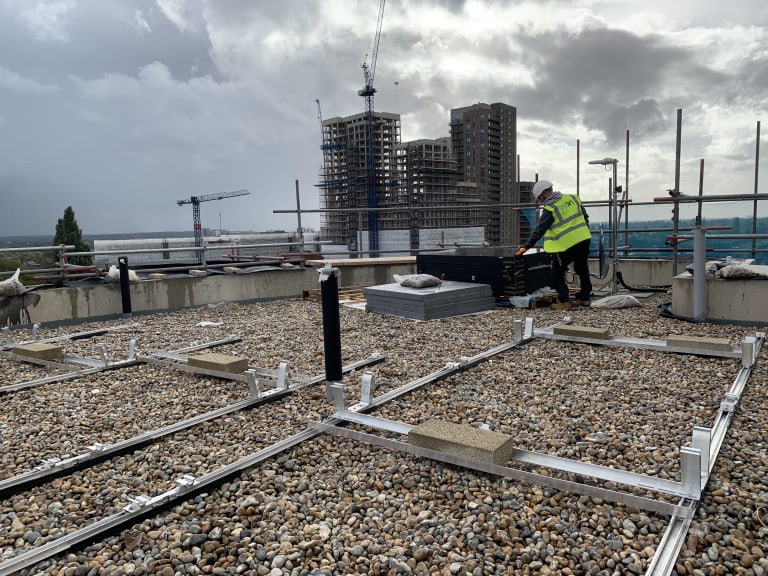
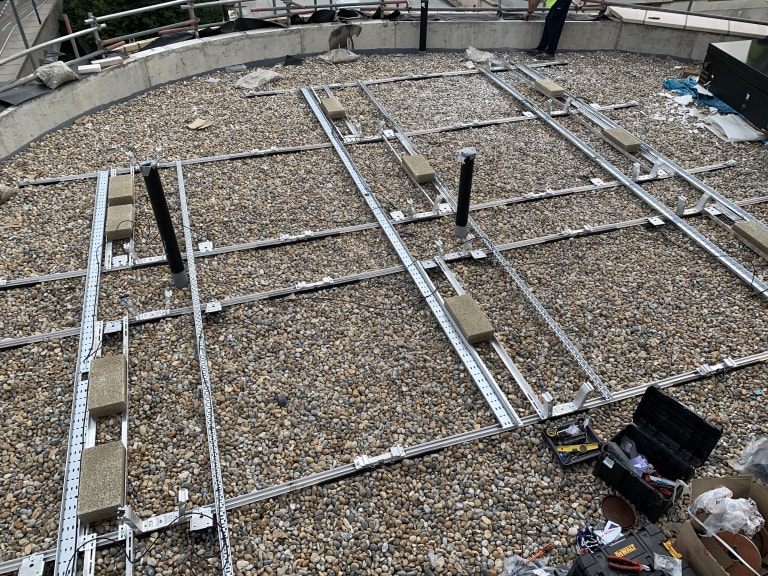
| Mounting System | K2 D-Dome Xpress ballasted flat roof, zero penetration |
| Orientation | East/West split, 9 panels at 73°, 9 panels at 254°, 10° tilt |
| Grid Connection | Three-phase, fed to ground-floor communal distribution board |
| Certification | MCS Zone 1, G98/G99 DNO compliant |
| Monitoring | SolarEdge portal with panel-level data + Energence GSM/AEMP smart meter |
| Client | Carty Forde Construction |
The Mirador is a new build apartment block in Acton, London, W3 6TN, delivered by Carty Forde Construction. The scheme comprises 23 apartments plus five houses and two commercial units across five storeys, handed over in late 2024. The building is all-electric with three air-source heat pumps and solar PV serving the landlord's communal supply. EV-ON designed, supplied, and installed the solar PV system to meet the on-site renewable generation target committed to in the planning energy statement.
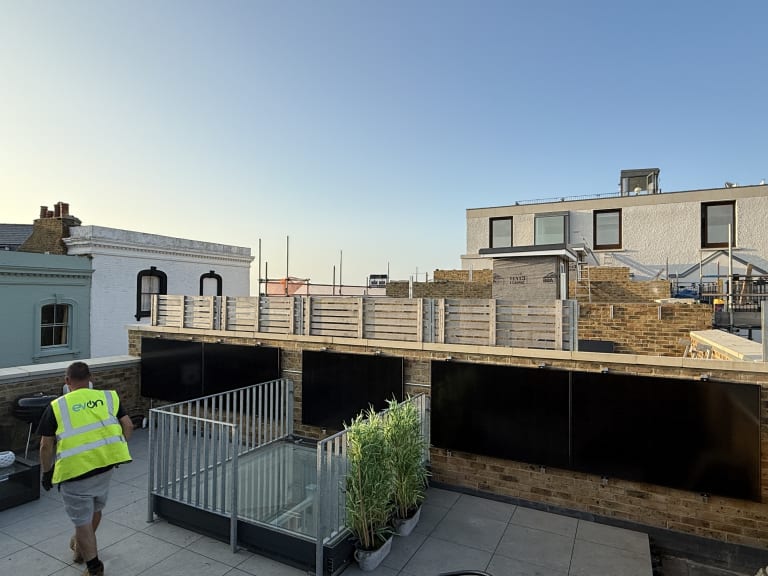
When we arrived for the final site measure in May 2024, the usable roof was broken up into far more separate pockets than the first survey had suggested. The original design had assumed a simpler layout than the finished building actually delivered. One unbroken south facing array at the size we needed was no longer possible. We had to redesign on site and still hit the generation figure the developer had committed to at planning.
The Mirador's flat roof was brand new, protected by a full waterproofing warranty from the main contractor. Standard solar mounting systems use mechanical fixings that penetrate the roof membrane. That voids waterproofing warranties and creates ingress risk across every apartment below. For a 23-apartment residential block, a water damage claim from compromised roof fabric would be costly, disruptive, and entirely preventable with the right mounting specification.
We were one of many trades on an active construction site. Fire alarm, building controls, security, data, heat pump, lift and roofing teams were all working to the same programme. Panel delivery had to land before the main contractor removed the crane at the end of May 2024. Installation then waited on two things: the roof being cleared of other trades' materials, and the cable route from Level 6 down to the ground floor plant room being built. Every visit needed coordinating with the project manager, the mechanical and electrical team, and the roofing contractor.
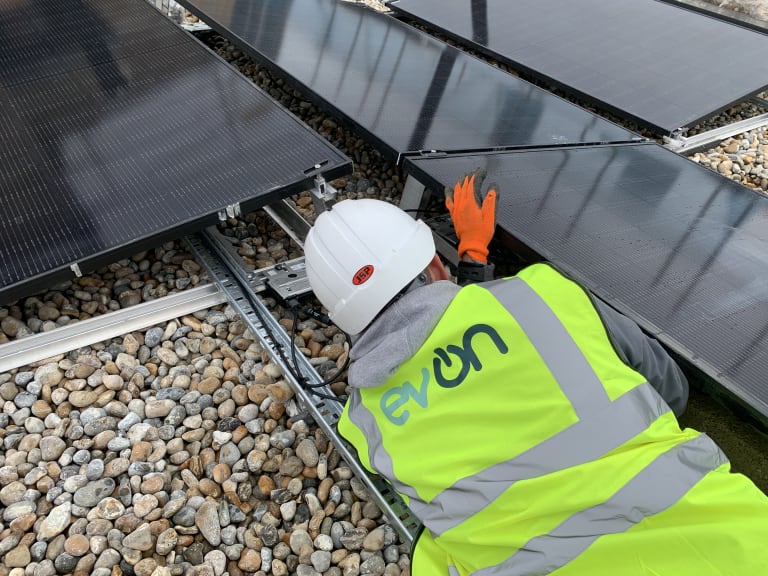
We used the K2 D-Dome system, which holds the panels down with weighted trays sitting on protective mats rather than bolts drilled through the roof. Nothing penetrates the waterproofing, so the warranty stayed intact in full. Before installing we ran the numbers against the structural engineer's design loading to confirm the roof could carry the added weight. It could, with no reinforcement needed. The finished array sits low against the roof at a shallow 10 degree tilt, which keeps wind loading down, and we left clear walkways so anyone can reach the inverter, the plant and the lightning protection around the parapet.
We changed the design on site and split the 18 panels into two groups, nine facing east and nine facing west, both lying at a shallow 10 degree tilt. Splitting an array like this normally costs you 10 to 15 per cent against a south facing roof. The reason is simple. One half is always in shade while the other half is at its peak, and on a standard system the weaker half drags the stronger half down. We removed that loss by fitting a power optimiser to every panel. Each one now works on its own, whatever the panels on the other side of the roof are doing. The finished system performs in line with what a south facing roof of the same size would give, and it delivered the 5,889 kWh a year the developer had committed to at planning.
We split the works into three stages so we never held anyone else up. First, materials arrived in May 2024 ahead of the crane coming down, and were stored on site. Second, once the roof was cleared in early October, we installed the 18 panels, the mounting system, the inverter and all 18 optimisers. While the cable route below us was still being built, we got as much of the rooftop wiring finished as we could, including the surge protection and isolators. Third, once that route from Level 6 down to the ground floor board was complete, we ran the cable, commissioned the system and passed the grid connection testing on 17 October 2024. Four days on site in total. The handover pack, with every test certificate and the maintenance manual, went to the client on 21 October.
The Mirador now has a 7.83 kWp SolarEdge solar system on its Level 6 flat roof, projected to generate 5,889 kWh per year for the landlord's communal electricity supply. The system is MCS certified, approved by the network operator, and was commissioned in October 2024. Projected annual CO₂ offset is 1.14 tonnes. It performs better than a split east and west London roof would normally manage, and that comes down to the optimiser on every panel making up for the split direction.
The landlord's communal supply now runs partially on solar during daylight hours. The same supply serves three air-source heat pumps for the building's heating. Every kilowatt-hour generated on the roof reduces communal electricity cost, which flows through to leaseholders via lower service charges. The system delivered the on-site renewable generation figure committed to in the planning energy statement under London Plan Policy SI 2 and Ealing Local Plan Policy 7.1.
For more on why solar panels for apartment buildings are increasingly standard on new build schemes in London, and what the 2028 Future Homes Standard will mean for developers completing after that date, see our solar for new build apartments page.


Every project surveyed, installed, commissioned and monitored by our own team. Grants secured and managed end to end.
View all case studiesTell us about your site. We survey, explain your options, and give you a clear quote with no obligation.
Enter your details below and one of our solar experts will be in touch.